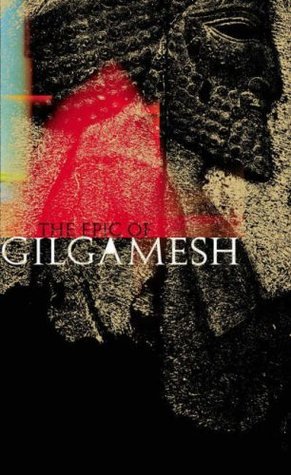
Miraculously preserved on clay tablets dating back as much as four thousand years, the poem of Gilgamesh, king of Uruk, is the world’s oldest epic, predating Homer by many centuries. The story tells of Gilgamesh’s adventures with the wild man Enkidu, and of his arduous journey to the ends of the earth in quest of the Babylonian Noah and the secret of immortality. Alongside its themes of family, friendship and the duties of kings, the Epic of Gilgamesh is, above all, about mankind’s eternal struggle with the fear of death.
The Babylonian version has been known for over a century, but linguists are still deciphering new fragments in Akkadian and Sumerian.
The Aeneid – thrilling, terrifying and poignant in equal measure – has inspired centuries of artists, writers and musicians.
Virgil’s epic tale tells the story of Aeneas, a Trojan hero, who flees his city after its fall, with his father Anchises and his young son Ascanius – for Aeneas is destined to found Rome and father the Roman race. As Aeneas journeys closer to his goal, he must first prove his worth and attain the maturity necessary for such an illustrious task. He battles raging storms in the Mediterranean, encounters the fearsome Cyclopes, falls in love with Dido, Queen of Carthage, travels into the Underworld and wages war in Italy.
Ovid’s sensuous and witty poem, in an accessible translation by David Raeburn
In Metamophoses, Ovid brings together a dazzling array of mythological tales, ingeniously linked by the idea of transformation—often as a result of love or lust—where men and women find themselves magically changed into new and sometimes extraordinary beings. Beginning with the creation of the world and ending with the deification of Augustus, Ovid interweaves many of the best-known myths and legends of ancient Greece and Rome, including Daedalus and Icarus, Pyramus and Thisbe, Pygmalion, Perseus and Andromeda, and the fall of Troy. Erudite but light-hearted, dramatic and yet playful, Metamorphoses has influenced writers and artists throughout the centuries from Shakespeare and Titian to Picasso and Ted Hughes.
For more than seventy years, Penguin has been the leading publisher of classic literature in the English-speaking world. With more than 1,700 titles, Penguin Classics represents a global bookshelf of the best works throughout history and across genres and disciplines. Readers trust the series to provide authoritative texts enhanced by introductions and notes by distinguished scholars and contemporary authors, as well as up-to-date translations by award-winning translators.
The first and most terrifying monster in English literature, from the great early epic Beowulf, tells his side of the story in a book William Gass called "one of the finest of our contemporary fictions."
Dating to the ninth century B.C., Homer’s timeless poem still vividly conveys the horror and heroism of men and gods wrestling with towering emotions and battling amidst devastation and destruction, as it moves inexorably to the wrenching, tragic conclusion of the Trojan War. Renowned classicist Bernard Knox observes in his superb introduction that although the violence of the Iliad is grim and relentless, it coexists with both images of civilized life and a poignant yearning for peace.
Combining the skills of a poet and scholar, Robert Fagles, winner of the PEN/Ralph Manheim Medal for Translation and a 1996 Academy Award in Literature from the American Academy of Arts and Letters, brings the energy of contemporary language to this enduring heroic epic. He maintains the drive and metric music of Homer’s poetry, and evokes the impact and nuance of the Iliad’s mesmerizing repeated phrases in what Peter Levi calls “an astonishing performance.”
"Day after day, day after day, We stuck, nor breath nor motion; As idle as a painted ship Upon a painted ocean.
The Rime of the Ancient Mariner (originally "The Rime of the Ancyent Marinere") is the longest major poem by the English poet Samuel Taylor Coleridge, written circa 1797 and published in 1798 in the first edition of Lyrical Ballads. Modern editions use a later revised version printed in 1817 and featuring a gloss. Along with other poems in Lyrical Ballads, it was a signal shift to modern poetry and the beginning of British Romantic literature.
It relates the events experienced by a mariner who has returned from a long sea voyage. The Mariner stops a man on his way to a wedding ceremony and begins to narrate a story. The Wedding-Guest's reaction turns from bemusement to impatience, fear, and fascination as the Mariner's story progresses, as can be seen in the language style: for example, the use of narrative techniques such as personification and repetition to create a sense of danger, or the supernatural, or serenity, depending on the mood each different part of the poem.
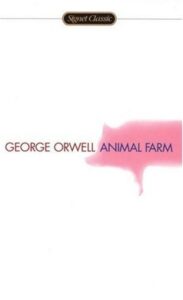
After years of exploitation, neglect, and despair, the animals of Manor Farm revolt. They drive owner Mr. Jones off the land and rechristen the property Animal Farm, a utopia of equality and mutual support. But Napoleon, a young boar who assumes command after the rebellion, is hungry for power. And as the pigs consolidate control, all the good intentions of Animal Farm are crushed by a new and inevitable tyranny.
George Orwell’s Animal Farm, the chilling allegorical satire about the working class and the gripping rhetoric of despots, illustrates just how easy the slide into oppression and totalitarianism can be.
Revised Previously published as Animal Farm , this edition of Animal Farm (AmazonClassics Edition) includes editorial revisions.
This volume reproduces the 1932 Modern Library edition, for which Bennett A. Cerf chose the most famous and representative stories from Sir Richard F. Burton's multivolume translation, and includes Burton's extensive and acclaimed explanatory notes.
The tales told by Shahrazad over a thousand and one nights to delay her execution by the vengeful King Shahriyar have become among the most popular in both Eastern and Western literature, as recounted by Sir Francis Burton. From the epic adventures of "Aladdin and the Enchanted Lamp" to the farcical "Young Woman and her Five Lovers" and the social criticism of "The Tale of the Hunchback", the stories depict a fabulous world of all-powerful sorcerers, jinns imprisoned in bottles and enchanting princesses. But despite their imaginative extravagance, the Tales are anchored to everyday life by their realism, providing a full and intimate record of medieval Islam.'
“And I will show you something different from either Your shadow at morning striding behind you Or your shadow at evening rising to meet you I will show you fear in a handful of dust”
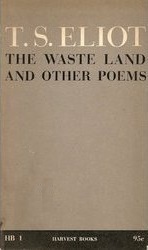
When The Waste Land was published in 1922, initial reaction to the poem was decidedly negative. Critics attacked the poem's "kaleidoscopic" design, and nearly everyone disagreed furiously about its meaning. The poem was even rumored to a hoax. Eventually, though, The Waste Land went on to become what many regard as the most influential poem written in English in the twentieth century.
"In ten years' time," wrote Edmund Wilson in Axel's Castle (1931), "Elliot has left upon English poetry a mark more unmistakable than that of any other poet writing in English." In 1948, T.S. Eliot was awarded the Nobel Price "for his work as a trail-blazing pioneer of modern poetry."
In addition to the title poem, this selection includes "The Love Song of J. Alfred Prufrock," "Geronition," "Ash-Wednesday," and other poems from Eliot's early and middle work.
Includes: - The Love Song of J. Alfred Prufrock - Preludes - Gerontion - Sweeney Among the Nightingales - The Waste Land: I. The Burial of the Dead II. A Game of Chess III. The Fire Sermon IV. Death by Water V. What the Thunder Said Notes on 'The Waste Land' - Ash-Wednesday -J ourney of the Magi - Marina - Landscapes: I. New Hampshire II. Virginia III. USK - Two Choruses from 'The Rock'
Welcome Back!
Track your reading progress and sync your library.