Nine gripping tales of psychological terror and the supernatural, by the undisputed master of the American Gothic horror story: *Ligeia *The Fall of the House of Usher *The Murders in the Rue Morgue *The Masque of the Red Death *The Pit and the Pendulum *The Tell-Tale Heart *The Gold-Bug *The Black Cat *The Cask of Amontillado
"The Cask of Amontillado" (sometimes spelled "The Casque ..") is a short story written by Edgar Allan Poe and first published in the November 1846 issue of "Godey's Lady's Book."
It is set in a nameless Italian city in an unspecified year (possibly during the eighteenth century) and concerns the revenge taken by the narrator on a friend who he claims has insulted him. Like several of Poe's stories, and in keeping with the 19th-century fascination with the subject, the narrative revolves around the possibility of a person being buried alive or enclosed in a small space with not possibility of escape (aka immurement).
Librarian's note: this entry relates to the story "The Cask of Amontillado." Collections of short stories by the author can be found elsewhere on Goodreads.
In Gustave Doré, one of the most prolific and successful book illustrators of the late 19h century, Edgar Allan Poe's renowned poem The Raven found perhaps its most perfect artistic interpreter. Doré's dreamlike, otherworldly style, tinged with melancholy, seems ideally matched to the bleak despair of Poe's celebrated work, among the most popular American poems ever written. This volume reprints all 26 of Doré's detailed, masterly engravings from a rare 19th-century edition of the poem. Relevant lines from the poem are printed on facing pages and the complete text is also included. Admirers of Doré will find ample evidence here of his characteristic ability to capture the mood and meaning of a work of literature in striking imagery; lovers of The Raven will delight in seeing its mournful musing on love and loss given dramatic pictorial form.
In a small American town, the local residents are abuzz with excitement and nervousness when they wake on the morning of the twenty-seventh of June. Everything has been prepared for the town’s annual tradition—a lottery in which every family must participate, and no one wants to win.
“The Lottery” stands out as one of the most famous short stories in American literary history. Originally published in The New Yorker, the author immediately began receiving letters from readers who demanded an explanation of the story’s meaning. “The Lottery” has been adapted for stage, television, radio and film.
The procession that crosses Chaucer's pages is as full of life and as richly textured as a medieval tapestry. The Knight, the Miller, the Friar, the Squire, the Prioress, the Wife of Bath, and others who make up the cast of characters -- including Chaucer himself -- are real people, with human emotions and weaknesses. When it is remembered that Chaucer wrote in English at a time when Latin was the standard literary language across western Europe, the magnitude of his achievement is even more remarkable. But Chaucer's genius needs no historical introduction; it bursts forth from every page of The Canterbury Tales.
If we trust the General Prologue, Chaucer intended that each pilgrim should tell two tales on the way to Canterbury and two tales on the way back. He never finished his enormous project and even the completed tales were not finally revised. Scholars are uncertain about the order of the tales. As the printing press had yet to be invented when Chaucer wrote his works, The Canterbury Tales has been passed down in several handwritten manuscripts.
Alternate covers of this ISBN can be found here, here and here.
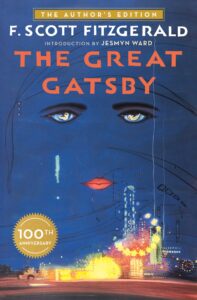
The only edition of the beloved classic that is authorized by Fitzgerald’s family and from his lifelong publisher.
This edition is the enduring original text, updated with the author’s own revisions, a foreword by his granddaughter, and with a new introduction by National Book Award winner Jesmyn Ward.
The Great Gatsby, F. Scott Fitzgerald’s third book, stands as the supreme achievement of his career. First published by Scribner in 1925, this quintessential novel of the Jazz Age has been acclaimed by generations of readers. The story of the mysteriously wealthy Jay Gatsby and his love for the beautiful Daisy Buchanan is an exquisitely crafted tale of America in the 1920s.
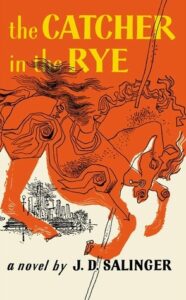
It's Christmas time and Holden Caulfield has just been expelled from yet another school...
Fleeing the crooks at Pencey Prep, he pinballs around New York City seeking solace in fleeting encounters—shooting the bull with strangers in dive hotels, wandering alone round Central Park, getting beaten up by pimps and cut down by erstwhile girlfriends. The city is beautiful and terrible, in all its neon loneliness and seedy glamour, its mingled sense of possibility and emptiness. Holden passes through it like a ghost, thinking always of his kid sister Phoebe, the only person who really understands him, and his determination to escape the phonies and find a life of true meaning.
The Catcher in the Rye is an all-time classic in coming-of-age literature- an elegy to teenage alienation, capturing the deeply human need for connection and the bewildering sense of loss as we leave childhood behind.
J.D. Salinger's (1919–2010) classic novel of teenage angst and rebellion was first published in 1951. The novel was included on Time's 2005 list of the 100 best English-language novels written since 1923. It was named by Modern Library and its readers as one of the 100 best English-language novels of the 20th century. It has been frequently challenged in the court for its liberal use of profanity and portrayal of sexuality and in the 1950's and 60's it was the novel that every teenage boy wants to read.
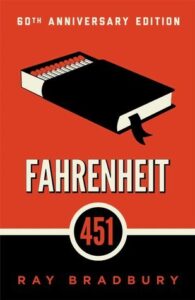
Fahrenheit 451 ofrece la historia de un sombrío y horroroso futuro. Montag, el protagonista, pertenece a una extraña brigada de bomberos cuya misión, paradójicamente, no es la de sofocar incendios sino la de provocarlos, para quemar libros. Porque en el país de Montag está terminantemente prohibido leer. Porque leer obliga a pensar, y en el país de Montag esta prohibido pensar. Porque leer impide ser ingenuamente feliz, y en el país de Montag hay que ser feliz a la fuerza...
Welcome Back!
Track your reading progress and sync your library.