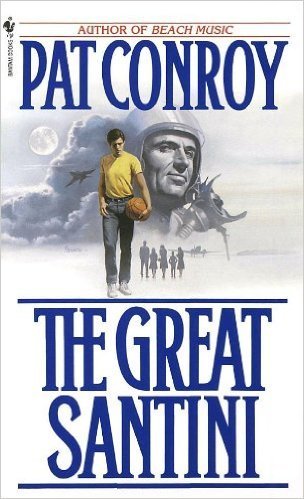
An American expatriate in Rome unearths his family legacy in this sweeping novel by the acclaimed author of The Prince of Tides and The Great Santini
A Southerner living abroad, Jack McCall is scarred by tragedy and betrayal. His desperate desire to find peace after his wife’s suicide draws him into a painful, intimate search for the one haunting secret in his family’s past that can heal his anguished heart. Spanning three generations and two continents, from the contemporary ruins of the American South to the ancient ruins of Rome, from the unutterable horrors of the Holocaust to the lingering trauma of Vietnam, Beach Music sings with life’s pain and glory. It is a novel of lyric intensity and searing truth, another masterpiece among Pat Conroy’s legendary and beloved novels.
In this masterful debut by a major new voice in fiction, Jon Clinch takes us on a journey into the history and heart of one of American literature’s most brutal and mysterious figures: Huckleberry Finn’s father. The result is a deeply original tour de force that springs from Twain’s classic novel but takes on a fully realized life of its own.
Finn sets a tragic figure loose in a landscape at once familiar and mythic. It begins and ends with a lifeless body–flayed and stripped of all identifying marks–drifting down the Mississippi. The circumstances of the murder, and the secret of the victim’s identity, shape Finn’s story as they will shape his life and his death.
Along the way Clinch introduces a cast of unforgettable characters: Finn’ s terrifying father, known only as the Judge; his sickly, sycophantic brother, Will; blind Bliss, a secretive moonshiner; the strong and quick-witted Mary, a stolen slave who becomes Finn’s mistress; and of course young Huck himself. In daring to re-create Huck for a new generation, Clinch gives us a living boy in all his human complexity–not an icon, not a myth, but a real child facing vast possibilities in a world alternately dangerous and bright.
Finn is a novel about race; about paternity in its many guises; about the shame of a nation recapitulated by the shame of one absolutely unforgettable family. Above all, Finn reaches back into the darkest waters of America’s past to fashion something compelling, fearless, and new.
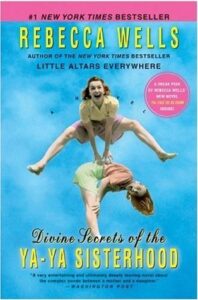
When Siddalee Walker, oldest daughter of Vivi Abbott Walker, Ya-Ya extraordinaire, is interviewed in the New York Times about a hit play she's directed, her mother gets described as a "tap-dancing child abuser." Enraged, Vivi disowns Sidda. Devastated, Sidda begs forgiveness, and postpones her upcoming wedding. All looks bleak until the Ya-Yas step in and convince Vivi to send Sidda a scrapbook of their girlhood mementos, called "Divine Secrets of the Ya-Ya Sisterhood." As Sidda struggles to analyze her mother, she comes face to face with the tangled beauty of imperfect love, and the fact that forgiveness, more than understanding, is often what the heart longs for.
The one and only Pat Conroy returns, with a big, sprawling novel that is at once a love letter to Charleston and to lifelong friendship.
Against the sumptuous backdrop of Charleston, South Carolina, South of Broad gathers a unique cast of sinners and saints. Leopold Bloom King, our narrator, is the son of an amiable, loving father who teaches science at the local high school. His mother, an ex-nun, is the high school principal and a well-known Joyce scholar. After Leo's older brother commits suicide at the age of thirteen, the family struggles with the shattering effects of his death, and Leo, lonely and isolated, searches for something to sustain him. Eventually, he finds his answer when he becomes part of a tightly knit group of high school seniors that includes friends Sheba and Trevor Poe, glamorous twins with an alcoholic mother and a prison-escapee father; hardscrabble mountain runaways Niles and Starla Whitehead; socialite Molly Huger and her boyfriend, Chadworth Rutledge X; and an ever-widening circle whose liaisons will ripple across two decades-from 1960s counterculture through the dawn of the AIDS crisis in the 1980s.
The ties among them endure for years, surviving marriages happy and troubled, unrequited loves and unspoken longings, hard-won successes and devastating breakdowns, and Charleston's dark legacy of racism and class divisions. But the final test of friendship that brings them to San Francisco is something no one is prepared for. South of Broad is Pat Conroy at his finest; a long-awaited work from a great American writer whose passion for life and language knows no bounds.
An old man lies dying. Propped up in his living room and surrounded by his children and grandchildren, George Washington Crosby drifts in and out of consciousness, back to the wonder and pain of his impoverished childhood in Maine. As the clock repairer’s time winds down, his memories intertwine with those of his father, an epileptic, itinerant peddler and his grandfather, a Methodist preacher beset by madness.
At once heartbreaking and life affirming, Tinkers is an elegiac meditation on love, loss, illness, faith, and the fierce beauty of nature.
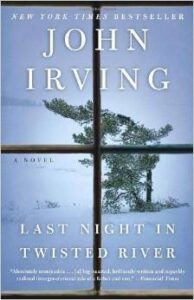
In 1954, in the cookhouse of a logging and sawmill settlement in northern New Hampshire, an anxious twelve-year-old boy mistakes the local constable’s girlfriend for a bear. Both the twelve-year-old and his father become fugitives, forced to run from Coos County–to Boston, to southern Vermont, to Toronto–pursued by the implacable constable. Their lone protector is a fiercely libertarian logger, once a river driver, who befriends them.
In a story spanning five decades, Last Night in Twisted River–John Irving’s twelfth novel–depicts the recent half-century in the United States as “a living replica of Coos County, where lethal hatreds were generally permitted to run their course.” From the novel’s taut opening sentence–“The young Canadian, who could not have been more than fifteen, had hesitated too long”–to its elegiac final chapter, Last Night in Twisted River is written with the historical authenticity and emotional authority of The Cider House Rules and A Prayer for Owen Meany. It is also as violent and disturbing a story as John Irving’s breakthrough bestseller, The World According to Garp.
What further distinguishes Last Night in Twisted River is the author’s unmistakable voice–the inimitable voice of an accomplished storyteller. Near the end of this moving novel, John Irving writes: “We don’t always have a choice how we get to know one another. Sometimes, people fall into our lives cleanly–as if out of the sky, or as if there were a direct flight from Heaven to Earth–the same sudden way we lose people, who once seemed they would always be part of our lives.”
It is 1970, and a down-at-the-heels California commune devoted to peace, free love, and the simple life has decided to relocate to the last frontier—the unforgiving landscape of interior Alaska—in the ultimate expression of going back to the land. Armed with the spirit of adventure and naïve optimism, the inhabitants of “Drop City” arrive in the wilderness of Alaska only to find their utopia already populated by other young homesteaders. When the two communities collide, unexpected friendships and dangerous enmities are born as everyone struggles with the bare essentials of life: love, nourishment, and a roof over one’s head. Rich, allusive, and unsentimental, T.C. Boyle’s ninth novel is a tour de force infused with the lyricism and take-no-prisoners storytelling for which he is justly famous.
Cannery Row is a book without much of a plot. Rather, it is an attempt to capture the feeling and people of a place, the cannery district of Monterey, California, which is populated by a mix of those down on their luck and those who choose for other reasons not to live "up the hill" in the more respectable area of town. The flow of the main plot is frequently interrupted by short vignettes that introduce us to various denizens of the Row, most of whom are not directly connected with the central story. These vignettes are often characterized by direct or indirect reference to extreme violence: suicides, corpses, and the cruelty of the natural world.
The "story" of Cannery Row follows the adventures of Mack and the boys, a group of unemployed yet resourceful men who inhabit a converted fish-meal shack on the edge of a vacant lot down on the Row.
Sweet Thursday is the sequel to Cannery Row.
Welcome Back!
Track your reading progress and sync your library.