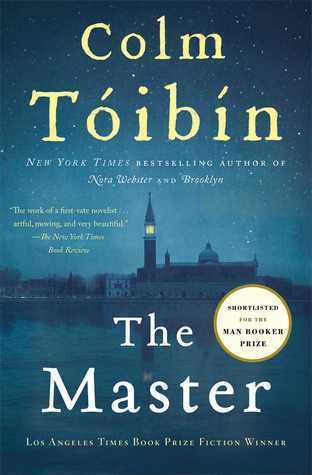
“Colm Tóibín’s beautiful, subtle illumination of Henry James’s inner life” (The New York Times) captures the loneliness and hope of a master of psychological subtlety whose forays into intimacy inevitably fail those he tried to love.
Beautiful and profoundly moving, The Master tells the story of Henry James, a man born into one of America’s first intellectual families who leaves his country in the late nineteenth century to live in Paris, Rome, Venice, and London among privileged artists and writers. With stunningly resonant prose, “The Master is unquestionably the work of a first-rate novelist: artful, moving, and very beautiful” (The New York Times Book Review). The emotional intensity of this portrait is riveting.
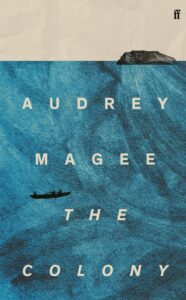
In 1979, as violence erupts all over Ireland, two outsiders travel to a small island off the west coast in search of their own answers, despite what it may cost the islanders.
It is the summer of 1979. An English painter travels to a small island off the west coast of Ireland. Mr. Lloyd takes the last leg by currach, though boats with engines are available and he doesn't much like the sea. He wants the authentic experience, to be changed by this place, to let its quiet and light fill him, give him room to create. He doesn't know that a Frenchman follows close behind. Jean-Pierre Masson has visited the island for many years, studying the language of those who make it their home. He is fiercely protective of their isolation, deems it essential to exploring his theories of language preservation and identity.
But the people who live on this rock--three miles long and half a mile wide--have their own views on what is being recorded, what is being taken, and what ought to be given in return. Over the summer, each of them--from great-grandmother Bean Uí Fhloinn to widowed Mairéad to fifteen-year-old James, who is determined to avoid the life of a fisherman--will wrestle with their values and desires. Meanwhile, all over Ireland, violence is erupting. And there is blame enough to go around.
An expertly woven portrait of character and place, a stirring investigation into yearning to find one's way, and an unflinchingly political critique of the long, seething cost of imperialism, Audrey Magee's The Colony is a novel that transports, that celebrates beauty and connection, and that reckons with the inevitable ruptures of independence.
The author of The Untouchable (“contemporary fiction gets no better than this”—Patrick McGrath, The New York Times Book Review) now gives us a luminous novel about love, loss, and the unpredictable power of memory. The narrator is Max Morden, a middle-aged Irishman who, soon after his wife’s death, has gone back to the seaside town where he spent his summer holidays as a child—a retreat from the grief, anger, and numbness of his life without her. But it is also a return to the place where he met the Graces, the well-heeled vacationing family with whom he experienced the strange suddenness of both love and death for the first time.
The seductive mother; the imperious father; the twins—Chloe, fiery and forthright, and Myles, silent and expressionless—in whose mysterious connection Max became profoundly entangled, each of them a part of the “barely bearable raw immediacy” of his childhood memories. Interwoven with this story are Morden’s memories of his wife, Anna—of their life together, of her death—and the moments, both significant and mundane, that make up his life now: his relationship with his grown daughter, Claire, desperate to pull him from his grief; and with the other boarders at the house where he is staying, where the past beats inside him “like a second heart.” What Max comes to understand about the past, and about its indelible effects on him, is at the center of this elegiac, vividly dramatic, beautifully written novel—among the finest we have had from this extraordinary writer
A story with no real beginning or end (it ends in the middle of a sentence and begins in the middle of the same sentence), this "book of Doublends Jined" is as remarkable for its prose as for its circular structure.
Written in a fantastic dream-language, forged from polyglot puns and portmanteau words, the Wake features some of Joyce's most hilarious characters: the Irish barkeep Humphrey Chimpden Earwicker, Shem the Penman, Shaun the Postman, and Anna Livia Plurabelle.
Joyce's final work, Finnegan's Wake is his masterpiece of the night as Ulysses is of the day. Supreme linguistic virtuosity conjures up the dark underground worlds of sexuality and dream. Joyce undermines traditional storytelling and all official forms of English and confronts the different kinds of betrayal - cultural, political and sexual - that he saw at the heart of Irish history. Dazzlingly inventive, with passages of great lyrical beauty and humour, Finnegans Wake remains one of the most remarkable works of the twentieth century.
In this unnamed city, to be interesting is dangerous. Middle sister, our protagonist, is busy attempting to keep her mother from discovering her maybe-boyfriend and to keep everyone in the dark about her encounter with Milkman. But when first brother-in-law sniffs out her struggle, and rumours start to swell, middle sister becomes 'interesting'. The last thing she ever wanted to be. To be interesting is to be noticed and to be noticed is dangerous.
Milkman is a tale of gossip and hearsay, silence and deliberate deafness. It is the story of inaction with enormous consequences.
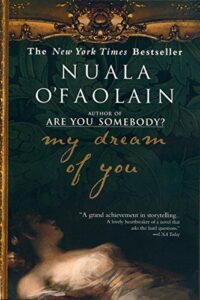
A New York Times notable book and bestseller, this debut novel from Irish Times columnist Nuala O'Faolain takes on life and love with Dickensian flair and the striking intimacy that characterized her bestselling and acclaimed memoir, Are You Somebody?
Set in Ireland and spanning a century and a half, My Dream of You unfolds the compelling stories of two women and their quests for passion, connection, and fulfillment. A globetrotting Irish travel writer, Kathleen de Burca is used to living--and loving--on the run. On the brink of fifty, she decides to leave her job and rethink her life. Intrigued by a divorce case dating back to the days of the Potato Famine, she tries hand at writing about it. The case, called "The Talbot Affair," detailed the clandestine liaison between the wife of a British landlord and an Irish servant in Ireland in the 1850s. After a bitter thirty-year absence, Kathleen returns to Ireland, the land of her troubled childhood and turbulent heritage, in search of answers to her questions about desire and lasting love.
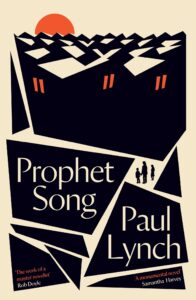
A fearless portrait of a society on the brink as a mother faces a terrible choice, from an internationally award-winning author
On a dark, wet evening in Dublin, scientist and mother-of-four Eilish Stack answers her front door to find the GNSB on her step. Two officers from Ireland’s newly formed secret police are here to interrogate her husband, a trade unionist.
Ireland is falling apart. The country is in the grip of a government turning towards tyranny and Eilish can only watch helplessly as the world she knew disappears. When first her husband and then her eldest son vanish, Eilish finds herself caught within the nightmare logic of a collapsing society.
How far will she go to save her family? And what – or who – is she willing to leave behind?
Exhilarating, terrifying and propulsive, Prophet Song is a work of breathtaking originality, offering a devastating vision of a country at war and a deeply human portrait of a mother’s fight to hold her family together.
In 1914, Willie Dunne, barely eighteen years old, leaves behind Dublin, his family, and the girl he plans to marry in order to enlist in the Allied forces and face the Germans on the Western Front. Once there, he encounters a horror of violence and gore he could not have imagined and sustains his spirit with only the words on the pages from home and the camaraderie of the mud-covered Irish boys who fight and die by his side. Dimly aware of the political tensions that have grown in Ireland in his absence, Willie returns on leave to find a world split and ravaged by forces closer to home. Despite the comfort he finds with his family, he knows he must rejoin his regiment and fight until the end. With grace and power, Sebastian Barry vividly renders Willie's personal struggle as well as the overwhelming consequences of war.
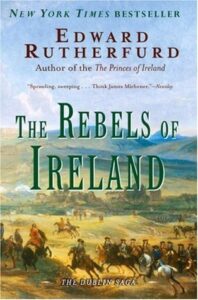
The reigning master of grand historical fiction returns with the stirring conclusion to his bestselling Dublin Saga.
The Princes of Ireland , the first volume of Edward Rutherfurd’s magisterial epic of Irish history, ended with the disastrous Irish revolt of 1534 and the disappearance of the sacred Staff of Saint Patrick. The Rebels of Ireland opens with an Ireland transformed; plantation, the final step in the centuries-long English conquest of Ireland, is the order of the day, and the subjugation of the native Irish Catholic population has begun in earnest.
Edward Rutherfurd brings history to life through the tales of families whose fates rise and fall in each generation: Brothers who must choose between fidelity to their ancient faith or the security of their families; a wife whose passion for a charismatic Irish chieftain threatens her comfortable marriage to a prosperous merchant; a young scholar whose secret rebel sympathies are put to the test; men who risk their lives and their children’s fortunes in the tragic pursuit of freedom, and those determined to root them out forever. Rutherfurd spins the saga of Ireland’s 400-year path to independence in all its drama, tragedy, and glory through the stories of people from all strata of society--Protestant and Catholic, rich and poor, conniving and heroic.
His richly detailed narrative brings to life watershed moments and events, from the time of plantation settlements to the “Flight of the Earls,” when the native aristocracy fled the island, to Cromwell’s suppression of the population and the imposition of the harsh anti-Catholic penal laws. He describes the hardships of ordinary people and the romantic, doomed attempt to overthrow the Protestant oppressors, which ended in defeat at the Battle of the Boyne in 1690, and the departure of the “Wild Geese.” In vivid tones Rutherfurd re-creates Grattan’s Parliament, Wolfe Tone's attempted French invasion of 1798, the tragic rising of Robert Emmet, the Catholic campaign of Daniel O’Connell, the catastrophic famine, the mass migration to America, and the glorious Irish Renaissance of Yeats and Joyce. And through the eyes of his characters, he captures the rise of Charles Stewart Parnell and the great Irish nationalists and the birth of an Ireland free of all ties to England.
A tale of fierce battles, hot-blooded romances, and family and political intrigues, The Rebels of Ireland brings the story begun in The Princes of Ireland to a stunning conclusion.
Welcome Back!
Track your reading progress and sync your library.