In the world of The Minority Report, Commissioner John Anderton is the one to thank for the lack of crime. He is the originator of the Precrime System, which uses precogs—people with the power to see into the future—to identify criminals before they can do any harm. Unfortunately for Anderton, his precogs perceive him as the next criminal.
In a thirtieth anniversary edition of the classic, the Harlequin, a rebel, inhabits a world where conformity and punctuality are top priorities, and the Ticktockman cannot accept the Harlequin's presence in his perfectly ordered world. 25,000 first printing. IP.
Welcome to Wayward Pines, population 461. Nestled amidst picture-perfect mountains, the idyllic town is a modern-day Eden...except for the electrified fence and razor wire, snipers scoping everything 24/7, and the relentless surveillance tracking each word and gesture. None of the residents know how they got here. They are told where to work, how to live, and who to marry. Some believe they are dead. Others think they’re trapped in an unfathomable experiment. Everyone secretly dreams of leaving, but those who dare face a terrifying surprise.
Ethan Burke has seen the world beyond. He’s sheriff, and one of the few who knows the truth—Wayward Pines isn’t just a town. And what lies on the other side of the fence is a nightmare beyond anyone’s imagining.
The Machine Stops is a science fiction short story (12,300 words) by E. M. Forster. After initial publication in The Oxford and Cambridge Review (November 1909), the story was republished in Forster's The Eternal Moment and Other Stories in 1928.
After being voted one of the best novellas up to 1965, it was included that same year in the populist anthology Modern Short Stories. In 1973 it was also included in The Science Fiction Hall of Fame, Volume Two.
The book is particularly notable for predicting new technologies such as instant messaging and the internet.
Some inhabitants of a peaceful kingdom cannot tolerate the act of cruelty that underlies its happiness.
The story 'Omelas" was first published in 'New Dimensions 3' (1973), a hard-cover science fiction anthology edited by Robert Silverberg, in October 1973, and the following year it won the prestigious Hugo Award for best short story.
Ursula K Le Guin (1929–2018) was an American writer who published twenty-two novels, eleven volumes of short stories, four collections of essays, twelve books for children, six volumes of poetry & four of translation, and has received many awards: Hugo, Nebula, National Book Award, PEN-Malamud, and more. She was known for her treatment of gender ('The Left Hand of Darkness' (1969), 'The Matter of Seggri' (1994)), political systems ('The Telling' (2000), 'The Dispossessed' (1974)) and difference/otherness in any other form.
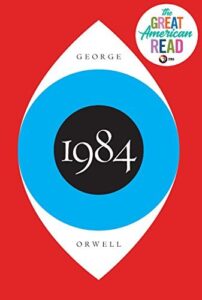
Among the seminal texts of the 20th century, Nineteen Eighty-Four is a rare work that grows more haunting as its futuristic purgatory becomes more real. Published in 1949, the book offers political satirist George Orwell's nightmarish vision of a totalitarian, bureaucratic world and one poor stiff's attempt to find individuality. The brilliance of the novel is Orwell's prescience of modern life—the ubiquity of television, the distortion of the language—and his ability to construct such a thorough version of hell. Required reading for students since it was published, it ranks among the most terrifying novels ever written.
Britain. The near-future. A right-wing government believes it has the answer to society’s ills — the Sanctity of Marriage Act, which actively encourages marriage as the norm, punishing those who choose to remain single.
But four couples are about to discover just how impossible relationships can be when the government is monitoring every aspect of our personal lives — monitoring every word, every minor disagreement — and will use every tool in its arsenal to ensure everyone will love, honor and obey.
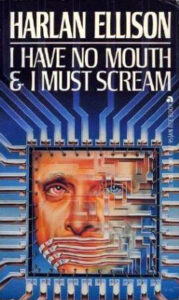
First published in 1967 and re-issued in 1983, I Have No Mouth and I Must Scream contains seven stories with copyrights ranging from 1958 through 1967. This edition contains the original introduction by Theodore Sturgeon and the original foreword by Harlan Ellison, along with a brief update comment by Ellison that was added in the 1983 edition. Among Ellison's more famous stories, two consistently noted as among his very best ever are the title story and the volume's concluding one, Pretty Maggie Moneyeyes.
Since Ellison himself strongly resists categorization of his work, we won't call them science fiction, or SF, or speculative fiction or horror or anything else except compelling reading experiences that are sui generis. They could only have been written by Harlan Ellison and they are incomparably original.
CONTENTS "I Have No Mouth & I Must Scream" "Big Sam Was My Friend" "Eyes of Dust" "World of the Myth" "Lonelyache" "Delusion for Dragonslayer" "Pretty Maggie Moneyeyes"
Welcome Back!
Track your reading progress and sync your library.