Pat Conroy has created a huge, brash thunderstorm of a novel, stinging with honesty and resounding with drama. ‘ Spanning forty years, this is the story of turbulent Tom Wingo, his gifted and troubled twin sister Savannah, and the dark and violent past of the extraordinary family into which they were born.
A gargantuan, mind-altering tragi-comedy about the Pursuit of Happiness in America.
Set in an addicts' halfway house and a tennis academy, and featuring the most endearingly screwed-up family to come along in recent fiction, Infinite Jest explores essential questions about what entertainment is and why it has come to so dominate our lives; about how our desire for entertainment affects our need to connect with other people; and about what the pleasures we choose say about who we are.
Equal parts philosophical quest and screwball comedy, Infinite Jest bends every rule of fiction without sacrificing for a moment its own entertainment value. It is an exuberant, uniquely American exploration of the passions that make us human—and one of those rare books that renew the idea of what a novel can do.
From a tormented orphan with a clubfoot, Philip Carey grows into an impressionable young man with a voracious appetite for adventure and knowledge. His cravings take him to Paris at age eighteen to try his hand at art, then back to London to study medicine. But even so, nothing can sate his nagging hunger for experience. Then he falls obsessively in love, embarking on a disastrous relationship that will change his life forever.…
Marked by countless similarities to Maugham’s own life, his masterpiece is “not an autobiography,” as the author himself once contended, “but an autobiographical novel; fact and fiction are inexorably mingled; the emotions are my own.”
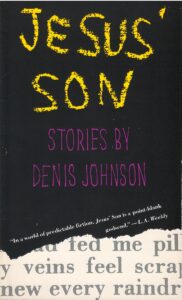
Jesus' Son, the first collection of stories by Denis Johnson, presents a unique, hallucinatory vision of contemporary American life unmatched in power and immediacy and marks a new level of achievement for this acclaimed writer. In their intensity of perception, their neon-lit evocation of a strange world brought uncomfortably close to our own, the stories in Jesus' Son offer a disturbing yet eerily beautiful portrayal of American loneliness and hope.
Contains: Car Crash While Hitchhiking Two Men Out on Bail Dundun Work Emergency Dirty Wedding The Other Man Happy Hour Steady Hands at Seattle General Beverly Home'
Eleven-year-old Owen Meany, playing in a Little League baseball game in Gravesend, New Hampshire, hits a foul ball and kills his best friend's mother. Owen doesn't believe in accidents; he believes he is God's instrument. What happens to Owen after that 1953 foul is both extraordinary and terrifying. At moments a comic, self-deluded victim, but in the end the principal, tragic actor in a divine plan, Owen Meany is the most heartbreaking hero John Irving has yet created.
Raised from birth in the orphanage at St. Cloud's, Maine, Homer Wells has become the protege of Dr. Wilbur Larch, its physician and director. There Dr. Larch cares for the troubled mothers who seek his help, either by delivering and taking in their unwanted babies or by performing illegal abortions. Meticulously trained by Dr. Larch, Homer assists in the former, but draws the line at the latter. Then a young man brings his beautiful fiancee to Dr. Larch for an abortion, and everything about the couple beckons Homer to the wide world outside the orphanage ...
This is the life and times of T. S. Garp, the bastard son of Jenny Fields—a feminist leader ahead of her times. This is the life and death of a famous mother and her almost-famous son; theirs is a world of sexual extremes—even of sexual assassinations. It is a novel rich with "lunacy and sorrow"; yet the dark, violent events of the story do not undermine a comedy both ribald and robust. In more than thirty languages, in more than forty countries—with more than ten million copies in print—this novel provides almost cheerful, even hilarious evidence of its famous last line: "In the world according to Garp, we are all terminal cases."
The Bonfire of the Vanities is a 1987 satirical novel by Tom Wolfe. The story is a drama about ambition, racism, social class, politics, and greed in 1980s New York City, and centers on three main characters: WASP bond trader Sherman McCoy, Jewish assistant district attorney Larry Kramer, and British expatriate journalist Peter Fallow.
The novel was originally conceived as a serial in the style of Charles Dickens' writings: It ran in 27 installments in Rolling Stone starting in 1984. Wolfe heavily revised it before it was published in book form. The novel was a bestseller and a phenomenal success, even in comparison with Wolfe's other books. It has often been called the quintessential novel of the 1980s.
Set in Los Angeles in the early 1980s, this coolly mesmerizing novel is a raw, powerful portrait of a lost generation that experienced sex, drugs, and disaffection at too early an age, growing up in a world shaped by casual nihilism, passivity, and too much money.
Clay comes home for Christmas vacation from his Eastern college and re-enters a landscape of limitless privilege and absolute moral entropy, where everyone drives Porches, dines at Spago, and snorts mountains of cocaine. He tries to renew feelings for his girlfriend, Blair, and for his best friend from high school, Julian, who is careering into hustling and heroin. Clay's holiday turns into a dizzying spiral of desperation that takes him through the relentless parties in glitzy mansions, seedy bars, and underground rock clubs, and into the seamy world of L.A. after dark.
Welcome Back!
Track your reading progress and sync your library.