There Will Come Soft Rains
First published in Collier’s, May 6, 1950.
The story concerns a household in Allendale, California, in the aftermath of a nuclear war.
First published in Collier’s, May 6, 1950.
The story concerns a household in Allendale, California, in the aftermath of a nuclear war.
In a thirtieth anniversary edition of the classic, the Harlequin, a rebel, inhabits a world where conformity and punctuality are top priorities, and the Ticktockman cannot accept the Harlequin's presence in his perfectly ordered world. 25,000 first printing. IP.
In a small American town, the local residents are abuzz with excitement and nervousness when they wake on the morning of the twenty-seventh of June. Everything has been prepared for the town’s annual tradition—a lottery in which every family must participate, and no one wants to win.
“The Lottery” stands out as one of the most famous short stories in American literary history. Originally published in The New Yorker, the author immediately began receiving letters from readers who demanded an explanation of the story’s meaning. “The Lottery” has been adapted for stage, television, radio and film.
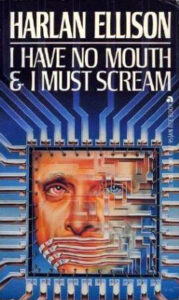
First published in 1967 and re-issued in 1983, I Have No Mouth and I Must Scream contains seven stories with copyrights ranging from 1958 through 1967. This edition contains the original introduction by Theodore Sturgeon and the original foreword by Harlan Ellison, along with a brief update comment by Ellison that was added in the 1983 edition. Among Ellison's more famous stories, two consistently noted as among his very best ever are the title story and the volume's concluding one, Pretty Maggie Moneyeyes.
Since Ellison himself strongly resists categorization of his work, we won't call them science fiction, or SF, or speculative fiction or horror or anything else except compelling reading experiences that are sui generis. They could only have been written by Harlan Ellison and they are incomparably original.
CONTENTS
"I Have No Mouth & I Must Scream"
"Big Sam Was My Friend"
"Eyes of Dust"
"World of the Myth"
"Lonelyache"
"Delusion for Dragonslayer"
"Pretty Maggie Moneyeyes"
“H. P. Lovecraft has yet to be surpassed as the 20th century’s greatest practitioner of the classic horror tale.”―Stephen King The most important tales of the godfather of the modern horror genre―a master who influenced the works of a generation of writers including Stephen King and Anne Rice―are gathered in one volume by National Book Award-winning author Joyce Carol Oates. Combining the 19th-century gothic sensibility of Edgar Allan Poe with a daring internal vision, Lovecraft’s tales foretold a psychically troubled world to come. Set in a meticulously wrought, historically grounded New England landscape, his harrowing stories explore the collapse of sanity beneath the weight of chaotic events. Lovecraft’s universe is a frightening shadow world were reality and nightmare intertwine, and redemption can come only from below. For aficionados and a new generation of 21st-century readers , Tales of H. P. Lovecraft is a classic not to be missed.
'It was a monstrous constellation of unnatural light, like a glutted swarm of corpse-fed fireflies dancing hellish sarabands over an accursed marsh...'
H.P. Lovecraft was perhaps the greatest twentieth century practitioner of the horror story, introducing to the genre a new evil, monstrous, pervasive and unconquerable. At the heart of these three stories are terrors unthinkable and strange: a crash-landing meteorite, the wretched inhabitant of an ancient castle and a grave-robber's curse. This book includes "The Colour Out Of Space", "The Outsider" and "The Hound".
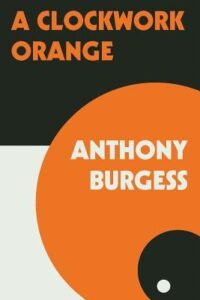
A vicious fifteen-year-old droog is the central character of this 1963 classic. In Anthony Burgess's nightmare vision of the future, where criminals take over after dark, the story is told by the central character, Alex, who talks in a brutal invented slang that brilliantly renders his and his friends' social pathology. A Clockwork Orange is a frightening fable about good and evil, and the meaning of human freedom. And when the state undertakes to reform Alex to "redeem" him, the novel asks, "At what cost?"
This edition includes the controversial last chapter not published in the first edition and Burgess's introduction "A Clockwork Orange Resucked."
In Gustave Doré, one of the most prolific and successful book illustrators of the late 19h century, Edgar Allan Poe's renowned poem The Raven found perhaps its most perfect artistic interpreter. Doré's dreamlike, otherworldly style, tinged with melancholy, seems ideally matched to the bleak despair of Poe's celebrated work, among the most popular American poems ever written.
This volume reprints all 26 of Doré's detailed, masterly engravings from a rare 19th-century edition of the poem. Relevant lines from the poem are printed on facing pages and the complete text is also included. Admirers of Doré will find ample evidence here of his characteristic ability to capture the mood and meaning of a work of literature in striking imagery; lovers of The Raven will delight in seeing its mournful musing on love and loss given dramatic pictorial form.