This a previously-published edition of ISBN 9780140621334
“We agree that we are overworked, and need a rest – A week on the rolling deep? – George suggests the river -“
And with the co-operation of several hampers of food and a covered boat, the three men (not forgetting the dog) set out on a hilarious voyage of mishaps up the Thames. When not falling in the river and getting lost in Hampton Court Maze, Jerome K. Jerome finds time to express his ideas on the world around – many of which have acquired a deeper fascination since the day at the end of the 19th century when this excursion was so lightly undertaken.
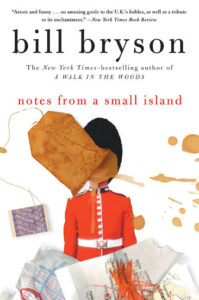
"Suddenly, in the space of a moment, I realized what it was that I loved about Britain-which is to say, all of it."
After nearly two decades spent on British soil, Bill Bryson - bestselling author of The Mother Tongue and Made in America-decided to return to the United States. ("I had recently read," Bryson writes, "that 3.7 million Americans believed that they had been abducted by aliens at one time or another, so it was clear that my people needed me.") But before departing, he set out on a grand farewell tour of the green and kindly island that had so long been his home.
Veering from the ludicrous to the endearing and back again, Notes from a Small Island is a delightfully irreverent jaunt around the unparalleled floating nation that has produced zebra crossings, Shakespeare, Twiggie Winkie's Farm, and places with names like Farleigh Wallop and Titsey. The result is an uproarious social commentary that conveys the true glory of Britain, from the satiric pen of an unapologetic Anglophile.
Take Gussie Fink-Nottle, Madeline Bassett, old Pop Bassett, the unscrupulous Stiffy Byng, the Rev., an 18th-century cow-creamer, a small brown leather covered notebook and mix with a dose of the aged aunt Dahlia and one has a dangerous brew which spells toil and trouble for Bertie and Jeeves.
An alternative cover edition for this ISBN can be found here
Regarded by many as the finest, and funniest, comic novel of the twentieth century, Lucky Jim remains as trenchant, withering, and eloquently misanthropic as when it first scandalized readers back in 1954. This is the story of Jim Dixon, a hapless lecturer in medieval history at a provincial university who knows better than most that “there was no end to the ways in which nice things are nicer than nasty ones.” Kingsley Amis’s scabrous debut leads the reader through a gallery of emphatically English bores, cranks, frauds, and neurotics with whom Dixon must contend in one way or another in order to hold on to his cushy academic perch and win the girl of his fancy.
More than just a merciless satire of cloistered college life and stuffy postwar manners, Lucky Jim is an attack on the forces of boredom, whatever form they may take, and a work of art that at once distills and extends an entire tradition of English comic writing, from Fielding and Dickens through Wodehouse and Waugh. As Christopher Hitchens has written, “If you can picture Bertie or Jeeves being capable of actual malice, and simultaneously imagine Evelyn Waugh forgetting about original sin, you have the combination of innocence and experience that makes this short romp so imperishable.”
Winner of the 1933 Femina Vie Heureuse Prize, COLD COMFORT FARM is a wickedly funny portrait of British rural life in the 1930s. Flora Poste, a recently orphaned socialite, moves in with her country relatives, the gloomy Starkadders of Cold Comfort Farm, and becomes enmeshed in a web of violent emotions, despair, and scheming, until Flora manages to set things right.
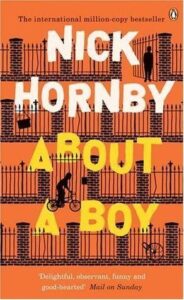
Will is thirty-six but acts like a teenager. Single, child-free and still feeling cool, he reads the right magazines, goes to the right clubs and knows which trainers to wear. He's also discovered a great way to score with women at single parents' groups, full of available (and grateful) mothers, all waiting for Mr Nice Guy. That's where he meets Marcus, the oldest twelve-year-old in the world. Marcus is a bit strange: he listens to Joni Mitchell and Mozart, he looks after his Mum and he's never even owned a pair of trainers. Perhaps if Will can teach Marcus how to be a kid, Marcus can help Will grow up and they can both start to act their age.
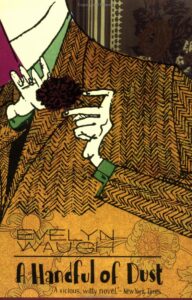
Laced with cynicism and truth, "A Handful of Dust" satirizes a certain stratum of English life where all the characters have wealth, but lack practically every other credential. Murderously urbane, it depicts the breakup of a marriage in the London gentry, where the errant wife suffers from terminal boredom, and becomes enamoured of a social parasite and professional luncheon-goer.
Hugh Bennett, young reporter on a local paper, witnessed a terrible crime—a group of boys stabbed a man to death on Guy Fawkes’ night, right in front of the fire on the village green. But as Bennett attempts to write the story for his paper, doubts begin to creep in about what he actually saw, and he finds himself facing an immense moral dilemma.
"A story has no beginning or end: arbitrarily one chooses a moment of experience from which to look ahead..."
"This is a record of hate far more than of love," writes Maurice Bendrix in the opening passages of The End of the Affair, and it is a strange hate indeed that compels him to set down the retrospective account of his adulterous affair with Sarah Miles.
Now, a year after Sarah's death, Bendrix seeks to exorcise the persistence of his passion by retracing its course from obsessive love to love-hate. At first, he believes he hates Sarah and her husband, Henry. Yet as he delves deeper into his emotional outlook, Bendrix's hatred shifts to the God he feels has broken his life, but whose existence at last comes to recognize.
Welcome Back!
Track your reading progress and sync your library.