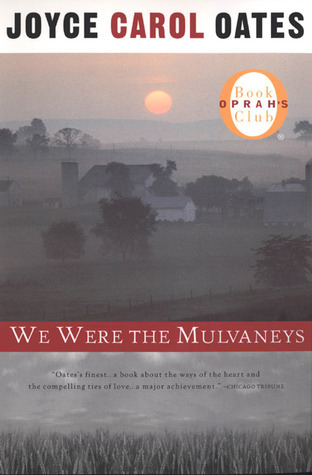
The Mulvaneys of High Point Farm in Mt. Ephraim, New York, are a large and fortunate clan, blessed with good looks, abundant charisma, and boundless promise. But over the twenty-five year span of this ambitious novel, the Mulvaneys will slide, almost imperceptibly at first, from the pinnacle of happiness, transformed by the vagaries of fate into a scattered collection of lost and lonely souls.It is the youngest son, Judd, now an adult, who attempts to piece together the fragments of the Mulvaneys’ former glory, seeking to uncover and understand the secret violation that occasioned the family’s tragic downfall. Each of the Mulvaneys endures some form of exile- physical or spiritual – but in the end they find a way to bridge the chasms that have opened up among them, reuniting in the spirit of love and healing.
Clear-eyed and spirited, Taylor Greer grew up poor in rural Kentucky with the goals of avoiding pregnancy and getting away. But when she heads west with high hopes and a barely functional car, she meets the human condition head-on. By the time Taylor arrives in Tucson, Arizona, she has acquired a completely unexpected child, a three-year-old American Indian girl named Turtle, and must somehow come to terms with both motherhood and the necessity for putting down roots. Hers is a story about love and friendship, abandonment and belonging, and the discovery of surprising resources in apparently empty places.
A modern classic, Housekeeping is the story of Ruth and her younger sister, Lucille, who grow up haphazardly, first under the care of their competent grandmother, then of two comically bumbling great-aunts, and finally of Sylvie, their eccentric and remote aunt. The family house is in the small Far West town of Fingerbone set on a glacial lake, the same lake where their grandfather died in a spectacular train wreck, and their mother drove off a cliff to her death. It is a town "chastened by an outsized landscape and extravagant weather, and chastened again by an awareness that the whole of human history had occurred elsewhere." Ruth and Lucille's struggle toward adulthood beautifully illuminates the price of loss and survival, and the dangerous and deep undertow of transience.
Aging Larry Cook announces his intention to turn over his 1,000-acre farm—one of the largest in Zebulon County, Iowa—to his three daughters, Caroline, Ginny, and Rose. A man of harsh sensibilities, he carves Caroline out of the deal because she has the nerve to be less than enthusiastic about her father's generosity. While Larry Cook deteriorates into a pathetic drunk, his daughters are left to cope with the often grim realities of life on a family farm—from battering husbands to cutthroat lenders. In this winner of the 1992 Pulitzer Prize for Fiction, Smiley captures the essence of such a life with stark, painful detail.
Through every family run memories which bind it together - despite everything. The Tulls of Baltimore are no exception. Abandoned by her salesman husband, Pearl is left to bring up her three children alone - Cody, a flawed devil, Ezra, a flawed saint, and Jenny, errant and passionate. Now as Pearl lies dying, stiffly encased in her pride and solitude, the past is unlocked and with it, secrets.
William Stoner is born at the end of the nineteenth century into a dirt-poor Missouri farming family. Sent to the state university to study agronomy, he instead falls in love with English literature and embraces a scholar’s life, so different from the hardscrabble existence he has known. And yet as the years pass, Stoner encounters a succession of disappointments: marriage into a “proper” family estranges him from his parents; his career is stymied; his wife and daughter turn coldly away from him; a transforming experience of new love ends under threat of scandal. Driven ever deeper within himself, Stoner rediscovers the stoic silence of his forebears and confronts an essential solitude.
John Williams’s luminous and deeply moving novel is a work of quiet perfection. William Stoner emerges from it not only as an archetypal American, but as an unlikely existential hero, standing, like a figure in a painting by Edward Hopper, in stark relief against an unforgiving world.
A gargantuan, mind-altering tragi-comedy about the Pursuit of Happiness in America.
Set in an addicts' halfway house and a tennis academy, and featuring the most endearingly screwed-up family to come along in recent fiction, Infinite Jest explores essential questions about what entertainment is and why it has come to so dominate our lives; about how our desire for entertainment affects our need to connect with other people; and about what the pleasures we choose say about who we are.
Equal parts philosophical quest and screwball comedy, Infinite Jest bends every rule of fiction without sacrificing for a moment its own entertainment value. It is an exuberant, uniquely American exploration of the passions that make us human—and one of those rare books that renew the idea of what a novel can do.
Crossing to Safety has, since its publication in 1987, established itself as one of the greatest and most cherished American novels of the twentieth century. Tracing the lives, loves, and aspirations of two couples who move between Vermont and Wisconsin, it is a work of quiet majesty, deep compassion, and powerful insight into the alchemy of friendship and marriage.
Jhumpa Lahiri's Interpreter of Maladies established this young writer as one the most brilliant of her generation. Her stories are one of the very few debut works -- and only a handful of collections -- to have won the Pulitzer Prize for fiction. Among the many other awards and honors it received were the New Yorker Debut of the Year award, the PEN/Hemingway Award, and the highest critical praise for its grace, acuity, and compassion in detailing lives transported from India to America.
In The Namesake, Lahiri enriches the themes that made her collection an international bestseller: the immigrant experience, the clash of cultures, the conflicts of assimilation, and, most poignantly, the tangled ties between generations. Here again Lahiri displays her deft touch for the perfect detail — the fleeting moment, the turn of phrase — that opens whole worlds of emotion.
The Namesake takes the Ganguli family from their tradition-bound life in Calcutta through their fraught transformation into Americans. On the heels of their arranged wedding, Ashoke and Ashima Ganguli settle together in Cambridge, Massachusetts. An engineer by training, Ashoke adapts far less warily than his wife, who resists all things American and pines for her family. When their son is born, the task of naming him betrays the vexed results of bringing old ways to the new world. Named for a Russian writer by his Indian parents in memory of a catastrophe years before, Gogol Ganguli knows only that he suffers the burden of his heritage as well as his odd, antic name.
Lahiri brings great empathy to Gogol as he stumbles along the first-generation path, strewn with conflicting loyalties, comic detours, and wrenching love affairs. With penetrating insight, she reveals not only the defining power of the names and expectations bestowed upon us by our parents, but also the means by which we slowly, sometimes painfully, come to define ourselves.
Welcome Back!
Track your reading progress and sync your library.