White Nights is a short story by Fyodor Dostoevsky that was published in 1848. Set in St. Petersburg, it is the story of a young man fighting his inner restlessness. A light and tender narrative, it delves into the torment and guilt of unrequited love. Both protagonists suffer from a deep sense of alienation that initially brings them together. A blend of romanticism and realism, the story appeals gently to the senses and feelings.
Hailed as one of the world's supreme masterpieces on the subject of death and dying, The Death of Ivan Ilyich is the story of a worldly careerist, a high court judge who has never given the inevitability of his dying so much as a passing thought. But one day, death announces itself to him, and to his shocked surprise, he is brought face to face with his own mortality.
How, Tolstoy asks, does an unreflective man confront his one and only moment of truth?
This short novel was an artistic culmination of a profound spiritual crisis in Tolstoy's life, a nine-year period following the publication of Anna Karenina during which he wrote not a word of fiction. A thoroughly absorbing, and, at times, terrifying glimpse into the abyss of death, it is also a strong testament to the possibility of finding spiritual salvation.
Published two weeks after his seventieth birthday, Ada, or Ardor is one of Nabokov's greatest masterpieces, the glorious culmination of his career as a novelist. It tells a love story troubled by incest. But more: it is also at once a fairy tale, epic, philosophical treatise on the nature of time, parody of the history of the novel, and erotic catalogue. Ada, or Ardor is no less than the superb work of an imagination at white heat.
This is the first American edition to include the extensive and ingeniously sardonic appendix by the author, written under the anagrammatic pseudonym Vivian Darkbloom.
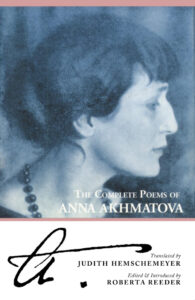
Initially published in 1990, when the New York Times Book Review named it one of fourteen "Best Books of the Year," Judith Hemschemeyer's translation of The Complete Poems of Anna Akhmatova is the definitive edition, and has sold over 13,000 copies, making it one of the most successful poetry titles of recent years. This reissued and revised printing features a new biographical essay as well as expanded notes to the poems, both by Roberta Reeder, project editor and author of Anna Akhmatova: Poet and Prophet (St. Martin's Press, 1994). Encyclopedic in scope, with more than 800 poems, 100 photographs, a historical chronology, index of first lines, and a bibliography. The Complete Poems will be the definitive English language collection of Akhmatova for many years to come.
Bazarov—a gifted, impatient, and caustic young man—has journeyed from school to the home of his friend Arkady Kirsanov. But soon Bazarov’s outspoken rejection of authority and social conventions touches off quarrels, misunderstandings, and romantic entanglements that will utterly transform the Kirsanov household and reflect the changes taking place across all of nineteenth-century Russia.
Fathers and Sons enraged the old and the young, reactionaries, romantics, and radicals alike when it was first published. At the same time, Turgenev won the acclaim of Flaubert, Maupassant, and Henry James for his craftsmanship as a writer and his psychological insight. Fathers and Sons is now considered one of the greatest novels of the nineteenth century.
A timeless depiction of generational conflict during social upheaval, it vividly portrays the clash between the older Russian aristocracy and the youthful radicalism that foreshadowed the revolution to come—and offers modern-day readers much to reflect upon as they look around at their own tumultuous, ever changing world.
Alternate Cover Edition ISBN 0679734511. (ISBN13: 9780679734512)
Inspired by the true story of a political murder that horrified Russians in 1869, Fyodor Dostoevsky conceived of Demons as a "novel-pamphlet" in which he would say everything about the plague of materialist ideology that he saw infecting his native land. What emerged was a prophetic and ferociously funny masterpiece of ideology and murder in pre-revolutionary Russia.
Román vypráví o osudu mukla a věčného vyhnance Olega Kostoglotova, který se v polovině padesátých let přichází léčit na taškentskou onkologickou kliniku. Je to v době, kdy Stalin je již dva roky mrtev, Berija popraven a kdy se začínají objevovat první nesmělé náznaky změn. Na onkologické klinice se setkávají členové strany i vyhnanci, národy, které sem Stalin vysídlil, i původní obyvatelé, lékaři i pacienti. Jejich společným nepřítelem je rakovina: nemoc, smrt, konec života... V blízkosti smrti padají všechny dosavadní jistoty, všechny plány, všechna privilegia. A v tomto světě rozehrává Solženicyn příběhy svých hrdinů, jejich lásek a nadějí. Nádory, sarkomy a metanoblastomy jsou nejen krutou skutečností, s níž se potýkají hrdinové románu i lékaři, ale i metaforou pro rakovinu lži, přetvářky, násilí a útlaku, která metastázuje do všech vrstev ruské společnosti.
O. Henry's classic tale of the wisest gifts of Christmas is itself a gift to share and treasure.
In a shabby New York flat, Della sobs as she counts the few coins she has saved to buy a Christmas present for her husband, Jim. One dollar and eighty-seven cents is all the money she has in the world. A gift worthy of her devotion will require a great sacrifice: selling her long, beautiful hair. Set in New York at the turn of the twentieth century, this classic piece of American literature tells the story of a young couple and the value of love.
Jim, meanwhile, has made a sacrifice for Della that is no less difficult. As they exchange gifts on Christmas Eve, the discovery of what each has done fills them with despair, until they realize that the true gifts of Christmas can be found more readily in their humble apartment than in any fine store. Set in New York at the turn of the twentieth century, this classic piece of American literature tells the story of a young couple and the value of love.
O. Henry paints a masterly portrait of unfaltering love, a haven from the harsh world outside. The poignancy of his story is captured in Zwerger's eloquent art, wherein every glance, every gesture, tells a subtle truth.
This satirical novel tells the story of the surgical transformation of a dog into a man, and is an obvious criticism of Soviet society, especially the new rich that arose after the Bolshevik revolution.
Welcome Back!
Track your reading progress and sync your library.