Lady Chatterley’s Lover
Lawrence’s frank portrayal of an extramarital affair and the explicit sexual explorations of its central characters caused this controversial book, now considered a masterpiece, to be banned as pornography until 1960.
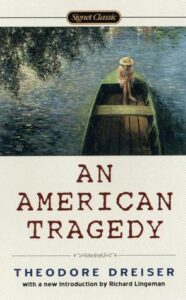
'An American Tragedy' is the story of Clyde Griffiths, who spends his life in the desperate pursuit of success. On a deeper, more profound level, it is the masterful portrayal of the society whose values both shape Clyde's ambitions and seal his fate; it is an unsurpassed depiction of the harsh realities of American life and of the dark side of the American dream. Extraordinary in scope and power, vivid in its sense of wholesale human waste, unceasing in its rich compassion, 'An American Tragedy' stands as Theodore Dreiser's supreme achievement.
Based on an actual criminal case, 'An American Tragedy' was the inspiration for the film 'A Place in the Sun', which won six Academy Awards and starred Elizabeth Taylor and Montgomery Clift.
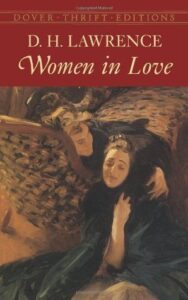
Widely regarded as D. H. Lawrence's greatest novel, Women in Love is both a lucid account of English society before the First World War, and a brilliant evocation of the inexorable power of human desire.
Women in Love continues where The Rainbow left off, with the third generation of Brangwens: Ursula Brangwen, now a teacher at Beldover, a mining town in the Midlands, and her sister Gudrun, who has returned from art school in London. The focus of the novel is primarily on their relationships, Ursula's with Rupert Birkin, a school inspector, and Gudrun's with industrialist Gerald Crich, and later with a sculptor, Loerke. Quintessentially modernist, Women in Love is one of Lawrence's most extraordinary, innovative and unsettling works.
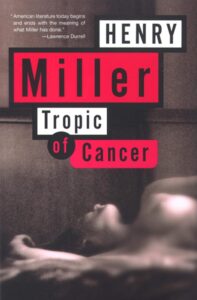
Now hailed as an American classic Tropic of Cancer, Henry Miller’s masterpiece, was banned as obscene in this country for twenty-seven years after its first publication in Paris in 1934. Only a historic court ruling that changed American censorship standards, ushering in a new era of freedom and frankness in modern literature, permitted the publication of this first volume of Miller’s famed mixture of memoir and fiction, which chronicles with unapologetic gusto the bawdy adventures of a young expatriate writer, his friends, and the characters they meet in Paris in the 1930s. Tropic of Cancer is now considered, as Norman Mailer said, "one of the ten or twenty great novels of our century."
Right from the start, Bigger Thomas had been headed for jail. It could have been for assault or petty larceny; by chance, it was for murder and rape. Native Son tells the story of this young black man caught in a downward spiral after he kills a young white woman in a brief moment of panic. Set in Chicago in the 1930s, Wright's powerful novel is an unsparing reflection on the poverty and feelings of hopelessness experienced by people in inner cities across the country and of what it means to be black in America.
For nearly a century, the original version of Upton Sinclair's classic novel has remained almost entirely unknown.
When it was published in serial form in 1905, it was a full third longer than the censored, commercial edition published in book form the following year. That expurgated commercial edition edited out much of the ethnic flavor of the original, as well as some of the goriest descriptions of the meat-packing industry and much of Sinclair's most pointed social and political commentary.
The text of this new edition is as it appeared in the original uncensored edition of 1905.
It contains the full 36 chapters as originally published, rather than the 31 of the expurgated edition.
A new foreword describes the discovery in the 1980s of the original edition and its subsequent suppression, and a new introduction places the novel in historical context by explaining the pattern of censorship in the shorter commercial edition.
Alternate covers of this ISBN can be found here, here and here.
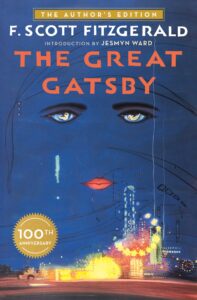
The only edition of the beloved classic that is authorized by Fitzgerald’s family and from his lifelong publisher.
This edition is the enduring original text, updated with the author’s own revisions, a foreword by his granddaughter, and with a new introduction by National Book Award winner Jesmyn Ward.
The Great Gatsby, F. Scott Fitzgerald’s third book, stands as the supreme achievement of his career. First published by Scribner in 1925, this quintessential novel of the Jazz Age has been acclaimed by generations of readers. The story of the mysteriously wealthy Jay Gatsby and his love for the beautiful Daisy Buchanan is an exquisitely crafted tale of America in the 1920s.
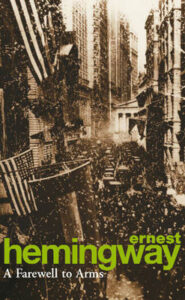
A Farewell to Arms is the unforgettable story of an American ambulance driver on the Italian front and his passion for a beautiful English nurse. Set against the looming horrors of the battlefield - the weary, demoralized men marching in the rain during the German attack on Caporetto; the profound struggle between loyalty and desertion—this gripping, semiautobiographical work captures the harsh realities of war and the pain of lovers caught in its inexorable sweep. Ernest Hemingway famously said that he rewrote his ending to A Farewell to Arms thirty-nine times to get the words right.
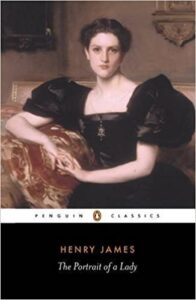
When Isabel Archer, a beautiful, spirited American, is brought to Europe by her wealthy Aunt Touchett, it is expected that she will soon marry. But Isabel, resolved to determine her own fate, does not hesitate to turn down two eligible suitors. She then finds herself irresistibly drawn to Gilbert Osmond, who, beneath his veneer of charm and cultivation, is cruelty itself. A story of intense poignancy, Isabel's tale of love and betrayal still resonates with modern audiences.