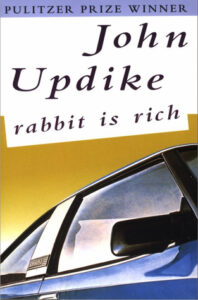
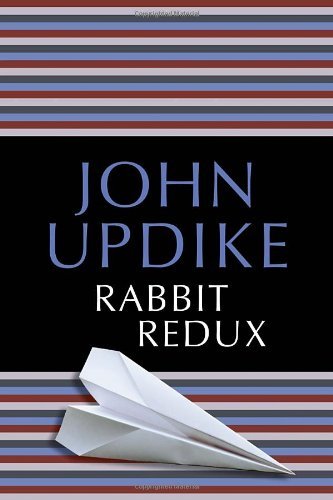
In this sequel to Rabbit, Run, John Updike resumes the spiritual quest of his anxious Everyman, Harry “Rabbit” Angstrom. Ten years have passed; the impulsive former athlete has become a paunchy thirty-six-year-old conservative, and Eisenhower’s becalmed America has become 1969’s lurid turmoil of technology, fantasy, drugs, and violence. Rabbit is abandoned by his family, his home invaded by a runaway and a radical, his past reduced to a ruined inner landscape; still he clings to semblances of decency and responsibility, and yearns to belong and to believe.
Ten years after Rabbit Redux, Harry Angstrom has come to enjoy prosperity as the Chief Sales Representative of Springer Motors. The rest of the world may be falling to pieces, but Harry's doing all right. That is, until his son returns from the West, and the image of an old love pays a visit to his lot....
DeDaumier-Smith's Blue Period, Teddy, and A Perfect Day for Bananafish are among the nine works in a collection of Salinger's perceptive and realistic short stories
Here are sixty-one stories that chronicle the lives of what has been called "the greatest generation." From the early wonder and disillusionment of city life in "The Enormous Radio" to the surprising discoveries and common mysteries of suburbia in "The Housebreaker of Shady Hill" and "The Swimmer," Cheever tells us everything we need to know about "the pain and sweetness of life."
Goodbye, my brother -- The common day -- The enormous radio -- O city of broken dreams -- The Hartleys -- The Sutton Place story -- The summer farmer -- Torch song -- The pot of gold -- Clancy in the Tower of Babel -- Christmas is a sad season for the poor -- The season of divorce -- The chaste Clarissa -- The cure -- The superintendent -- The children -- The sorrows of gin -- O youth and beauty! -- The day the pig fell into the well -- The five-forty-eight -- Just one more time -- The housebreaker of Shady Hill -- The bus to St. James's -- The worm in the apple -- The trouble of Marcie Flint -- The bella lingua -- The Wrysons -- The country husband -- The duchess -- The scarlet moving van -- Just tell me who it was -- Brimmer -- The golden age -- The lowboy -- The music teacher -- A woman without a country -- The death of Justina -- Clementina -- Boy in Rome -- A miscellany of characters that will not appear -- The chimera -- The seaside houses -- The angel of the bridge -- The brigadier and the golf widow -- A vision of the world -- Reunion -- An educated American woman -- Metamorphoses -- Mene, mene, tekel, upharsin -- Montraldo -- The ocean -- Marito in città -- The geometry of love -- The swimmer -- The world of apples -- Another story -- Percy -- The fourth alarm -- Artemis, the honest well digger -- Three stories -- The jewels of the Cabots.
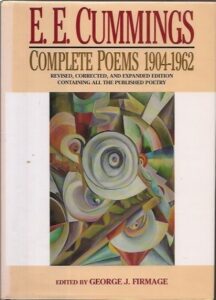
At the time of his death in 1962, E. E. Cummings was, next to Robert Frost, the most widely read poet in America. Combining Thoreau's controlled belligerence with the brash abandon of an uninhibited bohemian, Cummings, together with Pound, Eliot, and William Carlos Williams, helped bring about the twentieth-century revolution in literary expression. He is recognized on the one hand as the author of some of the most beautiful lyric poems written in the English language, and on the other as one of the most inventive American poets of his time in the worlds of Richard Kostelanetz, "the major American poet of the middle-twentieth-century."
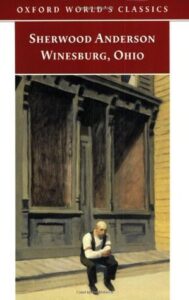
Winesburg, Ohio depicts the strange, secret lives of the inhabitants of a small town. In "Hands," Wing Biddlebaum tries to hide the tale of his banishment from a Pennsylvania town, a tale represented by his hands. In "Adventure," lonely Alice Hindman impulsively walks naked into the night rain. Threaded through the stories is the viewpoint of George Willard, the young newspaper reporter who, like his creator, stands witness to the dark and despairing dealings of a community of isolated people.
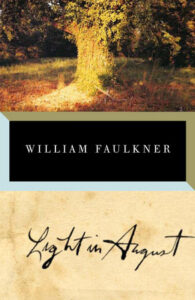
Light in August, a novel that contrasts stark tragedy with hopeful perseverance in the face of mortality, which features some of Faulkner’s most memorable characters: guileless, dauntless Lena Grove, in search of the father of her unborn child; Reverend Gail Hightower, a lonely outcast haunted by visions of Confederate glory; and Joe Christmas, a desperate, enigmatic drifter consumed by his mixed ancestry.
Babbitt is a satirical novel about American culture and society that critiques the vacuity of middle class life and the social pressure toward conformity. The controversy provoked by Babbitt was influential in the decision to award the Nobel Prize in Literature to Lewis in 1930.
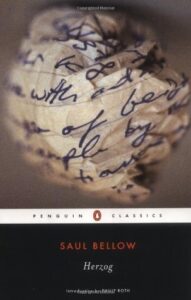
This is the story of Moses Herzog, a great sufferer, joker, mourner, and charmer. Although his life steadily disintegrates around him - he has failed as a writer and teacher, as a father, and has lost the affection of his wife to his best friend - Herzog sees himself as a survivor, both of his private disasters and those of the age. He writes unsent letters to friends and enemies, colleagues and famous people, revealing his wry perception of the world around him, and the innermost secrets of his heart.
Welcome Back!
Track your reading progress and sync your library.