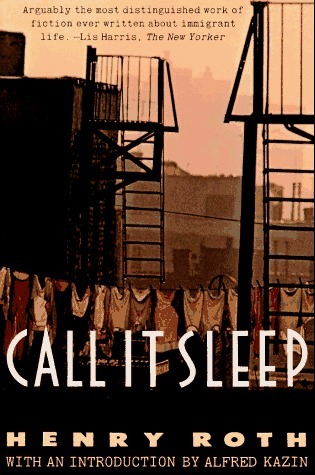
When Henry Roth published Call It Sleep, his first novel, in 1934, it was greeted with critical acclaim. But in that dark Depression year, books were hard to sell, and the novel quickly dropped out of sight, as did its twenty-eight-year-old author. Only with its paperback publication in 1964 did the novel receive the recognition it deserves. Call It Sleep was the first paperback ever to be reviewed on the front page of The New York Times Book Review, and it proceeded to sell millions of copies both in the United States and around the world.
Call It Sleep is the magnificent story of David Schearl, the “dangerously imaginative” child coming of age in the slums of New York.
William Stoner is born at the end of the nineteenth century into a dirt-poor Missouri farming family. Sent to the state university to study agronomy, he instead falls in love with English literature and embraces a scholar’s life, so different from the hardscrabble existence he has known. And yet as the years pass, Stoner encounters a succession of disappointments: marriage into a “proper” family estranges him from his parents; his career is stymied; his wife and daughter turn coldly away from him; a transforming experience of new love ends under threat of scandal. Driven ever deeper within himself, Stoner rediscovers the stoic silence of his forebears and confronts an essential solitude.
John Williams’s luminous and deeply moving novel is a work of quiet perfection. William Stoner emerges from it not only as an archetypal American, but as an unlikely existential hero, standing, like a figure in a painting by Edward Hopper, in stark relief against an unforgiving world.
A modern classic of historical fiction written in the form of Claudius's autobiography.
Tiberius Claudius Drusus Nero Germanicus lived from 10 B.C. to 54 A.D. Despised as a weakling and dismissed as an idiot because of his physical infirmities, Claudius survived the intrigues and poisonings that marked the reigns of Augustus, Tiberius, and the mad Caligula to become emperor of Rome in 41 A.D. The first part of Robert Graves’s two-part account of the life of Tiberius Claudius, I, Claudius stands as a landmark historical novel of the 20th century from one of its great writers.
Giants in the Earth (Norwegian: Verdens Grøde) is a novel by Norwegian-American author Ole Edvart Rølvaag. First published in Norway as two books in 1924 and 1925, the author collaborated with Minnesotan Lincoln Colcord on the English translation.
The novel follows a Norwegian family's struggles as they try to make a new life as pioneers in the Dakota territory. Rølvaag is interested in psychology and the human cost of empire building, at a time when other writers focused on the glamor and romance of the West. The book reflects his personal experiences as a settler as well as the immigrant homesteader experience of his wife’s family. Both the grim realities of pioneering and the gloomy fatalism of the Norse mind are captured in depictions of snow storms, locusts, poverty, hunger, loneliness, homesickness, the difficulty of fitting into a new culture, and the estrangement of immigrant children who grow up in a new land. It is a novel at once palpably European and distinctly American.
Giants in the Earth was turned into an opera by Douglas Moore and Arnold Sundgaard; it won the Pulitzer Prize for Music in 1951.
The magnificent second novel from the legendary author of One Flew Over the Cuckoo's Nest...
Following the astonishing success of his first novel, One Flew Over the Cuckoo's Nest, Ken Kesey wrote what Charles Bowden calls "one of the few essential books written by an American in the last half century." This wild-spirited tale tells of a bitter strike that rages through a small lumber town along the Oregon coast. Bucking that strike out of sheer cussedness are the Stampers. Out of the Stamper family's rivalries and betrayals Ken Kesey has crafted a novel with the mythic impact of Greek tragedy.
Diamond Head, Hawaii, 1941. Pvt. Robert E. Lee Prewitt is a champion welterweight and a fine bugler. But when he refuses to join the company's boxing team, he gets "the treatment" that may break him or kill him.
First Sgt. Milton Anthony Warden knows how to soldier better than almost anyone, yet he's risking his career to have an affair with the commanding officer's wife.
Both Warden and Prewitt are bound by a common bond: the Army is their heart and blood... and, possibly, their death.
In this magnificent but brutal classic of a soldier's life, James Jones portrays the courage, violence and passions of men and women who live by unspoken codes and with unutterable despair... in the most important American novel to come out of World War II, a masterpiece that captures as no other the honor and savagery of men.
Cannery Row is a book without much of a plot. Rather, it is an attempt to capture the feeling and people of a place, the cannery district of Monterey, California, which is populated by a mix of those down on their luck and those who choose for other reasons not to live "up the hill" in the more respectable area of town. The flow of the main plot is frequently interrupted by short vignettes that introduce us to various denizens of the Row, most of whom are not directly connected with the central story. These vignettes are often characterized by direct or indirect reference to extreme violence: suicides, corpses, and the cruelty of the natural world.
The "story" of Cannery Row follows the adventures of Mack and the boys, a group of unemployed yet resourceful men who inhabit a converted fish-meal shack on the edge of a vacant lot down on the Row.
Considered by critics to be Barth's most distinguished masterpiece, The Sot-Weed Factor has acquired the status of a modern classic. Set in the late 1600s, it recounts the wildly chaotic odyssey of hapless, ungainly Ebenezer Cooke, sent to the New World to look after his father's tobacco business and to record the struggles of the Maryland colony in an epic poem.
On his mission, Cooke experiences capture by pirates and Indians; the loss of his father's estate to roguish impostors; love for a farmer prostitute; stealthy efforts to rob him of his virginity, which he is (almost) determined to protect; and an extraordinary gallery of treacherous characters who continually switch identities. A hilarious, bawdy tribute to all the most insidious human vices, The Sot-Weed Factor has a lasting relevance for readers of all times.
The classic novel, international sensation, and inspiration for the film starring Anthony Quinn explores the struggle between the aesthetic and the rational, the inner life and the life of the mind.
The classic novel Zorba the Greek is the story of two men, their incredible friendship, and the importance of living life to the fullest. Zorba, a Greek working man, is a larger-than-life character, energetic and unpredictable. He accompanies the unnamed narrator to Crete to work in the narrator’s lignite mine, and the pair develops a singular relationship. The two men couldn’t be further apart: The narrator is cerebral, modest, and reserved; Zorba is unfettered, spirited, and beyond the reins of civility. Over the course of their journey, he becomes the narrator’s greatest friend and inspiration and helps him to appreciate the joy of living.
Zorba has been acclaimed as one of the most remarkable figures in literature; he is a character in the great tradition of Sinbad the Sailor, Falstaff, and Sancho Panza. He responds to all that life offers him with passion, whether he’s supervising laborers at a mine, confronting mad monks in a mountain monastery, embellishing the tales of his past adventures, or making love. Zorba the Greek explores the beauty and pain of existence, inviting readers to reevaluate the most important aspects of their lives and live to the fullest.
Welcome Back!
Track your reading progress and sync your library.