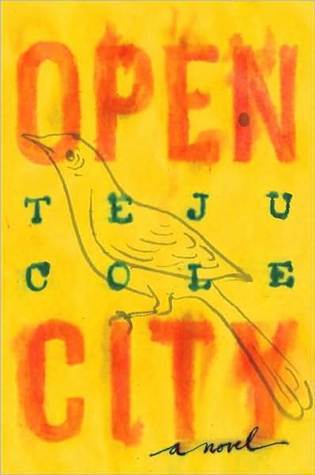
Along the streets of Manhattan, a young Nigerian doctor doing his residency wanders aimlessly. The walks meet a need for Julius: they are a release from the tightly regulated mental environment of work, and they give him the opportunity to process his relationships, his recent breakup with his girlfriend, his present, his past.
But it is not only a physical landscape he covers; Julius crisscrosses social territory as well, encountering people from different cultures and classes who will provide insight on his journey—which takes him to Brussels, to the Nigeria of his youth, and into the most unrecognizable facets of his own soul.
It is a stunningly eventful day in the life of Eric Packer, a multi-billionaire who has recently married the heiress of a vast European fortune. A violent protest is being staged by anti-globalist groups and Eric fears that he may be a target. He is very much the target - but not by the protestors.
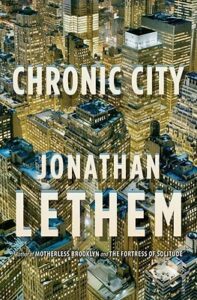
The acclaimed author of Motherless Brooklyn and The Fortress of Solitude returns with a roar with this gorgeous, searing portrayal of Manhattanites wrapped in their own delusions, desires, and lies.
Chase Insteadman, a handsome, inoffensive fixture on Manhattan's social scene, lives off residuals earned as a child star on a beloved sitcom called Martyr & Pesty. Chase owes his current social cachet to an ongoing tragedy much covered in the tabloids: His teenage sweetheart and fiancée, Janice Trumbull, is trapped by a layer of low-orbit mines on the International Space Station, from which she sends him rapturous and heartbreaking love letters. Like Janice, Chase is adrift, she in Earth's stratosphere, he in a vague routine punctuated by Upper East Side dinner parties.
Into Chase's cloistered city enters Perkus Tooth, a wall-eyed free-range pop critic whose soaring conspiratorial riffs are fueled by high-grade marijuana, mammoth cheeseburgers, and a desperate ache for meaning. Perkus's countercultural savvy and voracious paranoia draw Chase into another Manhattan, where questions of what is real, what is fake, and who is complicit take on a life-shattering urgency. Along with Oona Laszlo, a self-loathing ghostwriter, and Richard Abneg, a hero of the Tompkins Square Park riot now working as a fixer for the billionaire mayor, Chase and Perkus attempt to unearth the answers to several mysteries that seem to offer that rarest of artifacts on an island where everything can be bought: Truth.
Like Manhattan itself, Jonathan Lethem's masterpiece is beautiful and tawdry, tragic and forgiving, devastating and antic, a stand-in for the whole world and a place utterly unique.
Diary of a Bad Year takes on the world of politics—a new topic for Coetzee—and explores the role of the writer in our times with an extraordinary moral compass.
J.M. Coetzee once again breaks literary ground with Diary of a Bad Year, a book that is, in the words of its protagonist, a response to the present in which I find myself. Aging author Senor C has been commissioned to write a series of essays entitled Strong Opinions, of which he has many. After hiring a beautiful young typist named Anya, the two embark on a relationship that will have a profound impact on them both especially when Alan, Anya's no-good boyfriend, develops designs on Senor C's bank account. Told in these three voices simultaneously, Coetzee has created any entirely new way of telling a story, and nothing less than an involving, argumentative, moving novel (The New Yorker).
From the prize-winning author of Motherless Brooklyn, a daring, riotous, sweeping novel that spins the tale of two friends and their adventures in late 20th-century America.
This is the story of two boys, Dylan Ebdus and Mingus Rude. They live in Brooklyn and are friends and neighbours; but since Dylan is white and Mingus is black, their friendship is not simple.
This is the story of 1970s America, a time when the simplest decisions—what music you listen to, whether to speak to the kid in the seat next to you, whether to give up your lunch money—are laden with potential political, social and racial disaster. This is also the story of 1990s America, when nobody cared anymore.
This is the story of what would happen if two teenaged boys obsessed with comic book heroes actually had superpowers: they would screw up their lives.
Since 1982, J. M. Coetzee has been dazzling the literary world. After eight novels that have won, among other awards, two Booker Prizes, and most recently, the Nobel Prize for literature, J.M. Coetzee has once again crafted an unusual and deeply affecting tale. Told through an ingenious series of formal addresses, Elizabeth Costello is, on the surface, the story of a woman's life as a mother, sister, lover, and writer. Yet it is also a profound and haunting meditation on the nature of storytelling.
An exciting literary debut: the unflinching and powerful story of a young girl's journey out of Zimbabwe and to America.
Darling is only ten years old, and yet she must navigate a fragile and violent world. In Zimbabwe, Darling and her friends steal guavas, try to get the baby out of young Chipo's belly, and grasp at memories of Before. Before their homes were destroyed by paramilitary policemen, before the school closed, before the fathers left for dangerous jobs abroad.
But Darling has a chance to escape: she has an aunt in America. She travels to this new land in search of America's famous abundance only to find that her options as an immigrant are perilously few. NoViolet Bulawayo's debut calls to mind the great storytellers of displacement and arrival who have come before her--from Junot Diaz to Zadie Smith to J.M. Coetzee--while she tells a vivid, raw story all her own.
In the dawning light of a late-summer morning, the people of lower Manhattan stand hushed, staring up in disbelief at the Twin Towers. It is August 1974, and a mysterious tightrope walker is running, dancing, leaping between the towers, suspended a quarter mile above the ground. In the streets below, a slew of ordinary lives become extraordinary in bestselling novelist Colum McCann’s stunningly intricate portrait of a city and its people. Let the Great World Spin is the critically acclaimed author’s most ambitious novel yet: a dazzlingly rich vision of the pain, loveliness, mystery, and promise of New York City in the 1970s.
Corrigan, a radical young Irish monk, struggles with his own demons as he lives among the prostitutes in the middle of the burning Bronx. A group of mothers gather in a Park Avenue apartment to mourn their sons who died in Vietnam, only to discover just how much divides them even in grief. A young artist finds herself at the scene of a hit-and-run that sends her own life careening sideways. Tillie, a thirty-eight-year-old grandmother, turns tricks alongside her teenage daughter, determined not only to take care of her family but to prove her own worth.
Elegantly weaving together these and other seemingly disparate lives, McCann’s powerful allegory comes alive in the unforgettable voices of the city’s people, unexpectedly drawn together by hope, beauty, and the “artistic crime of the century.” A sweeping and radical social novel, Let the Great World Spin captures the spirit of America in a time of transition, extraordinary promise, and, in hindsight, heartbreaking innocence. Hailed as a “fiercely original talent” (San Francisco Chronicle), award-winning novelist McCann has delivered a triumphantly American masterpiece that awakens in us a sense of what the novel can achieve, confront, and even heal.
Summertime is an inventive and inspired work of fiction that allows J.M. Coetzee to imagine his own life with a critical and unsparing eye, revealing painful moral struggles and attempts to come to grips with what it means to care for another human being.
A young English biographer is researching a book about the late South African writer John Coetzee, focusing on Coetzee in his thirties, at a time when he was living in a rundown cottage in the Cape Town suburbs with his widowed father - a time, the biographer is convinced, when Coetzee was finding himself as a writer. Never having met the man himself, the biographer interviews five people who knew Coetzee well, including a married woman with whom he had an affair, his cousin Margot, and a Brazilian dancer whose daughter took English lessons with him. These accounts add up to an image of an awkward, reserved, and bookish young man who finds it hard to make meaningful connections with the people around him.
Summertime is an inventive and inspired work of fiction that allows J.M. Coetzee to imagine his own life with a critical and unsparing eye, revealing painful moral struggles and attempts to come to grips with what it means to care for another human being. Incisive, elegant, and often surprisingly funny, Summertime is a compelling work by one of today's most esteemed writers.
Welcome Back!
Track your reading progress and sync your library.