Published to international critical and popular acclaim, this intensely romantic yet stunningly realistic novel spans three generations and the unimaginable gulf between the First World War and the present. As the young Englishman Stephen Wraysford passes through a tempestuous love affair with Isabelle Azaire in France and enters the dark, surreal world beneath the trenches of No Man’s Land, Sebastian Faulks creates a world of fiction that is as tragic as A Farewell to Arms and as sensuous as The English Patient. Crafted from the ruins of war and the indestructibility of love, Birdsong is a novel that will be read and marveled at for years to come.
It is 1939. Despite a law banning him from performing surgery, Ravic – a German doctor and refugee living in Paris – has been treating some of the city’s most elite citizens for two years on the behalf of two less-than-skillful French physicians. Forbidden to return to his own country, and dodging the everyday dangers of jail and deportation, Ravic manages to hang on – all the while searching for the Nazi who tortured him back in Germany. And though he’s given up on the possibility of love, life has a curious way of taking a turn for the romantic, even during the worst of times….
Captain Corelli’s Mandolin is set in the early days of the second world war, before Benito Mussolini invaded Greece. Dr Iannis practices medicine on the island of Cephalonia, accompanied by his daughter, Pelagia, to whom he imparts much of his healing art. Even when the Italians do invade, life isn’t so bad—at first anyway. The officer in command of the Italian garrison is the cultured Captain Antonio Corelli, who responds to a Nazi greeting of “Heil Hitler” with his own “Heil Puccini”, and whose most precious possession is his mandolin. It isn't long before Corelli and Pelagia are involved in a heated affair--despite her engagement to a young fisherman, Mandras, who has gone off to join Greek partisans. Love is complicated enough in wartime, even when the lovers are on the same side. And for Corelli and Pelagia, it becomes increasingly difficult to negotiate the minefield of allegiances, both personal and political, as all around them atrocities mount, former friends become enemies and the ugliness of war infects everyone it touches.
British author Louis de Bernières is well known for his forays into magical realism in such novels as The War of Don Emmanuel's Nether Parts, Señor Vivo and the Coca Lord and The Troublesome Offspring of Cardinal Guzman. Here he keeps it to a minimum, though certainly the secondary characters with whom he populates his island—the drunken priest, the strongman, the fisherman who swims with dolphins—would be at home in any of his wildly imaginative Latin American fictions. Instead, de Bernières seems interested in dissecting the nature of history as he tells his ever-darkening tale from many different perspectives. Captain Corelli’s Mandolin works on many levels, as a love story, a war story and a deconstruction of just what determines the facts that make it into the history books.
Librarian note: alternate covers for this edition can be found here and here and here.
During the summer of 1941 the Metanov family are living a hard life in Leningrad. As the German armies advance their future looks bleak. For Tatiana, love arrives in the guise of Alexander, who harbours a deadly and extraordinary secret.
In 1914, Willie Dunne, barely eighteen years old, leaves behind Dublin, his family, and the girl he plans to marry in order to enlist in the Allied forces and face the Germans on the Western Front. Once there, he encounters a horror of violence and gore he could not have imagined and sustains his spirit with only the words on the pages from home and the camaraderie of the mud-covered Irish boys who fight and die by his side. Dimly aware of the political tensions that have grown in Ireland in his absence, Willie returns on leave to find a world split and ravaged by forces closer to home. Despite the comfort he finds with his family, he knows he must rejoin his regiment and fight until the end. With grace and power, Sebastian Barry vividly renders Willie's personal struggle as well as the overwhelming consequences of war.
London is poised on the brink of World War II. Timid, scrawny Willie Beech -- the abused child of a single mother -- is evacuated to the English countryside. At first, he is terrified of everything, of the country sounds and sights, even of Mr. Tom, the gruff, kindly old man who has taken him in. But gradually Willie forgets the hate and despair of his past. He learns to love a world he never knew existed, a world of friendship and affection in which harsh words and daily beatings have no place. Then a telegram comes. Willie must return to his mother in London. When weeks pass by with no word from Willie, Mr. Tom sets out for London to look for the young boy he has come to love as a son.
John Galsworthy, a Nobel Prize-winning author, chronicles the ebbing social power of the commercial upper-middle-class Forsyte family through three generations, beginning in Victorian London during the 1880s and ending in the early 1920s.
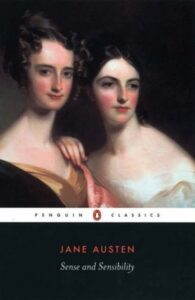
'The more I know of the world, the more am I convinced that I shall never see a man whom I can really love. I require so much!'
Marianne Dashwood wears her heart on her sleeve, and when she falls in love with the dashing but unsuitable John Willoughby she ignores her sister Elinor's warning that her impulsive behaviour leaves her open to gossip and innuendo. Meanwhile Elinor, always sensitive to social convention, is struggling to conceal her own romantic disappointment, even from those closest to her. Through their parallel experience of love—and its threatened loss—the sisters learn that sense must mix with sensibility if they are to find personal happiness in a society where status and money govern the rules of love.
This edition includes explanatory notes, textual variants between the first and second editions, and Tony Tanner's introduction to the original Penguin Classic edition.
The newest edition is here. Another alternate cover can be found here.
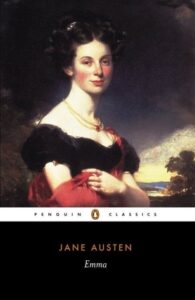
Emma Woodhouse is one of Austen's most captivating and vivid characters. Beautiful, spoilt, vain and irrepressibly witty, Emma organizes the lives of the inhabitants of her sleepy little village and plays matchmaker with devastating effect.
Welcome Back!
Track your reading progress and sync your library.