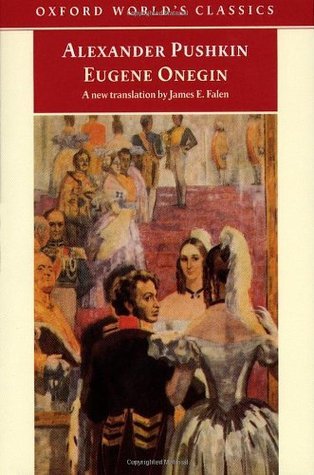
Eugene Onegin is the master work of the poet whom Russians regard as the fountainhead of their literature. Set in 1820s Russia, Pushkin’s verse novel follows the fates of three men and three women. Engaging, full of suspense, and varied in tone, it also portrays a large cast of other characters and offers the reader many literary, philosophical, and autobiographical digressions, often in a highly satirical vein. Eugene Onegin was Pushkin’s own favourite work, and this new translation conveys the literal sense and the poetic music of the original.
Bazarov—a gifted, impatient, and caustic young man—has journeyed from school to the home of his friend Arkady Kirsanov. But soon Bazarov’s outspoken rejection of authority and social conventions touches off quarrels, misunderstandings, and romantic entanglements that will utterly transform the Kirsanov household and reflect the changes taking place across all of nineteenth-century Russia.
Fathers and Sons enraged the old and the young, reactionaries, romantics, and radicals alike when it was first published. At the same time, Turgenev won the acclaim of Flaubert, Maupassant, and Henry James for his craftsmanship as a writer and his psychological insight. Fathers and Sons is now considered one of the greatest novels of the nineteenth century.
A timeless depiction of generational conflict during social upheaval, it vividly portrays the clash between the older Russian aristocracy and the youthful radicalism that foreshadowed the revolution to come—and offers modern-day readers much to reflect upon as they look around at their own tumultuous, ever changing world.
Chichikov, a mysterious stranger, arrives in a provincial town and visits a succession of landowners to make each a strange offer. He proposes to buy the names of dead serfs still registered on the census, saving their owners from paying taxes on them, and to use these 'souls' as collateral to re-invent himself as a gentleman. In this ebullient masterpiece, Gogol created a grotesque gallery of human types, from the bear-like Sobakevich to the insubstantial fool Manilov, and, above all, the devilish con man Chichikov. Dead Souls, Russia's first major novel, is one of the most unusual works of nineteenth-century fiction and a devastating satire on social hypocrisy.
In his introduction to this new translation, Robert A. Maguire discusses Gogol's life and literary career, his depiction of Russian society, and the language and narrative techniques employed in Dead Souls. This edition also includes a chronology, further reading, appendices, a glossary, map and notes.
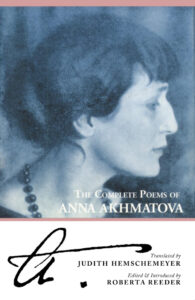
Initially published in 1990, when the New York Times Book Review named it one of fourteen "Best Books of the Year," Judith Hemschemeyer's translation of The Complete Poems of Anna Akhmatova is the definitive edition, and has sold over 13,000 copies, making it one of the most successful poetry titles of recent years. This reissued and revised printing features a new biographical essay as well as expanded notes to the poems, both by Roberta Reeder, project editor and author of Anna Akhmatova: Poet and Prophet (St. Martin's Press, 1994). Encyclopedic in scope, with more than 800 poems, 100 photographs, a historical chronology, index of first lines, and a bibliography. The Complete Poems will be the definitive English language collection of Akhmatova for many years to come.
The American poet John Shade is dead. His last poem, 'Pale Fire', is put into a book, together with a preface, a lengthy commentary and notes by Shade's editor, Charles Kinbote. Known on campus as the 'Great Beaver', Kinbote is haughty, inquisitive, intolerant, but is he also mad, bad - and even dangerous? As his wildly eccentric annotations slide into the personal and the fantastical, Kinbote reveals perhaps more than he should be.
Nabokov's darkly witty, richly inventive masterpiece is a suspenseful whodunit, a story of one-upmanship and dubious penmanship, and a glorious literary conundrum.
Part of a major new series of the works of Vladimir Nabokov, author of Lolita and Pale Fire, in Penguin Classics.
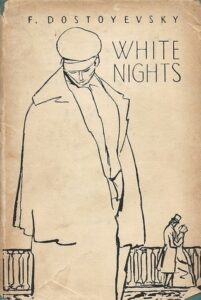
White Nights is a short story by Fyodor Dostoevsky that was published in 1848. Set in St. Petersburg, it is the story of a young man fighting his inner restlessness. A light and tender narrative, it delves into the torment and guilt of unrequited love. Both protagonists suffer from a deep sense of alienation that initially brings them together. A blend of romanticism and realism, the story appeals gently to the senses and feelings.
In Russia's struggle with Napoleon, Tolstoy saw a tragedy that involved all mankind.
War and Peace broadly focuses on Napoleon’s invasion of Russia in 1812 and follows three of the most well-known characters in literature: Pierre Bezukhov, the illegitimate son of a count who is fighting for his inheritance and yearning for spiritual fulfillment; Prince Andrei Bolkonsky, who leaves his family behind to fight in the war against Napoleon; and Natasha Rostov, the beautiful young daughter of a nobleman who intrigues both men.
As Napoleon’s army invades, Tolstoy brilliantly follows characters from diverse backgrounds—peasants and nobility, civilians and soldiers—as they struggle with the problems unique to their era, their history, and their culture. And as the novel progresses, these characters transcend their specificity, becoming some of the most moving—and human—figures in world literature.
Tolstoy gave his personal approval to this translation, published here in a new single volume edition, which includes an introduction by Henry Gifford, and Tolstoy's important essay `Some Words about War and Peace'.
This epic tale about the effects of the Russian Revolution and its aftermath on a bourgeois family was not published in the Soviet Union until 1987. One of the results of its publication in the West was Pasternak's complete rejection by Soviet authorities; when he was awarded the Nobel Prize for Literature in 1958 he was compelled to decline it. The book quickly became an international best-seller.
Dr. Yury Zhivago, Pasternak's alter ego, is a poet, philosopher, and physician whose life is disrupted by the war and by his love for Lara, the wife of a revolutionary. His artistic nature makes him vulnerable to the brutality and harshness of the Bolsheviks. The poems he writes constitute some of the most beautiful writing featured in the novel.
Alternate Cover Edition ISBN 0679734511. (ISBN13: 9780679734512)
Inspired by the true story of a political murder that horrified Russians in 1869, Fyodor Dostoevsky conceived of Demons as a "novel-pamphlet" in which he would say everything about the plague of materialist ideology that he saw infecting his native land. What emerged was a prophetic and ferociously funny masterpiece of ideology and murder in pre-revolutionary Russia.
Welcome Back!
Track your reading progress and sync your library.