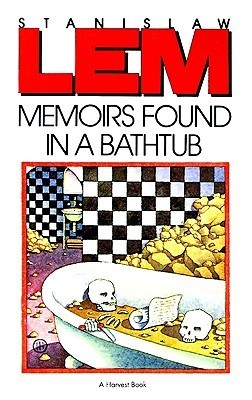
The year is 3149, and a vast paper destroying blight-papyralysis-has obliterated much of the planet’s written history. However, these rare memoirs, preserved for centuries in a volcanic rock, record the strange life of a man trapped in a hermetically sealed underground community. Translated by Michael Kandel and Christine Rose.
Substance D is not known as Death for nothing. It is the most toxic drug ever to find its way on to the streets of LA. It destroys the links between the brain's two hemispheres, causing, first, disorientation and then complete and irreversible brain damage.
The undercover narcotics agent who calls himself Bob Arctor is desperate to discover the ultimate source of supply. But to find any kind of lead he has to pose as a user and, inevitably, without realising what is happening, Arctor is soon as addicted as the junkies he works among...
A vicious fifteen-year-old droog is the central character of this 1963 classic. In Anthony Burgess's nightmare vision of the future, where criminals take over after dark, the story is told by the central character, Alex, who talks in a brutal invented slang that brilliantly renders his and his friends' social pathology. A Clockwork Orange is a frightening fable about good and evil, and the meaning of human freedom. And when the state undertakes to reform Alex to "redeem" him, the novel asks, "At what cost?"
This edition includes the controversial last chapter not published in the first edition and Burgess's introduction "A Clockwork Orange Resucked."
No food, no water, no government, no obligation, no order.
Discover a chillingly powerful and prescient dystopian vision from one of Europe's greatest writers.
A driver waiting at the traffic lights goes blind. An ophthalmologist tries to diagnose his distinctive white blindness, but is affected before he can read the textbooks. It becomes a contagion, spreading throughout the city. Trying to stem the epidemic, the authorities herd the afflicted into a mental asylum where the wards are terrorised by blind thugs. And when fire destroys the asylum, the inmates burst forth and the last links with a supposedly civilised society are snapped.
This is not anarchy, this is blindness.
‘Saramago repeatedly undertakes to unite the pressing demands of the present with an unfolding vision of the future. This is his most apocalyptic, and most optimistic, version of that project yet’ Independent
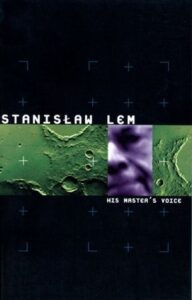
Twenty-five hundred scientists have been herded into an isolated site in the Nevada desert. A neutrino message of extraterrestrial origin has been received and the scientists, under the surveillance of the Pentagon, labor on His Master's Voice, the secret program set up to decipher the transmission. Among them is Peter Hogarth, an eminent mathematician. When the project reaches a stalemate, Hogarth pursues clandestine research into the classified TX Effect--another secret breakthrough. But when he discovers, to his horror, that the TX Effect could lead to the construction of a fission bomb, Hogarth decides such knowledge must not be allowed to fall into the hands of the military.
In the overcrowded world and cramped space colonies of the late 21st century, tedium can be endured through the drug Can-D, which enables users to inhabit a shared illusory world. When industrialist Palmer Eldritch returns from an interstellar trip, he brings with him a new drug, Chew-Z. It is far more potent than Can-D, but threatens to plunge the world into a permanent state of drugged illusion controlled by the mysterious Eldritch.
The Futurological Congress is the fourth satirical science fiction novel in the Memoirs of Ijon Tichy series from Kafka Prize–winning author Stanislaw Lem.
“Nobody can really know the future. But few could imagine it better than Lem.”— Paris Review
Bringing his twin gifts of scientific speculation and scathing satire to bear on that hapless planet, Earth, Lem sends his unlucky cosmonaut, Ijon Tichy, to the Eighth Futurological Congress. Caught up in local revolution, Tichy is shot and so critically wounded that he is flashfrozen to await a future cure—a future whose strangeness exceeds anything the congress conjectured.
Translated by Michael Kandel.
“A vision of Earth’s future where the authorities dose the population with ‘psychemicals’ to make life in a desperately over-populated world worth living.”— Boston Globe
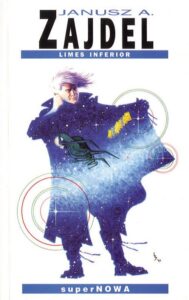
W absurdalnym, sztucznie wykreowanym świecie Argolandu, nic nie jest tym, czym się na pierwszy rzut oka wydaje. Drobny kombinator dzięki sprytowi i inteligencji odkrywa prawdę o pozornie idealnym porządku społeczno-ekonomicznym.
Sztandarowa powieść Janusza A. Zajdla, twórcy nurtu fantastyki socjologicznej w Polsce. Główny bohater, Adi Cherryson, alias Sneer, wzorowany jest na postaci kolegi po piórze, Adamie Wiśniewskim-Snergu. Stanisław Lem uznał Limes inferior za najoryginalniejszą polską powieść SF, jaką czytał.
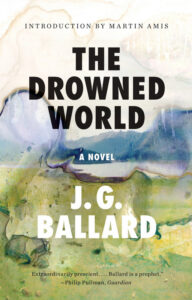
In the 21st century, fluctuations in solar radiation have caused the ice-caps to melt and the seas to rise. Global temperatures have climbed, and civilization has retreated to the Arctic and Antarctic circles. London is a city now inundated by a primeval swamp, to which an expedition travels to record the flora and fauna of this new Triassic Age.
This early novel by the author of CRASH and EMPIRE OF THE SUN is at once a fast paced narrative, a stunning evocation of a flooded, tropical London of the near future and a speculative foray into the workings of the unconscious mind.
Welcome Back!
Track your reading progress and sync your library.