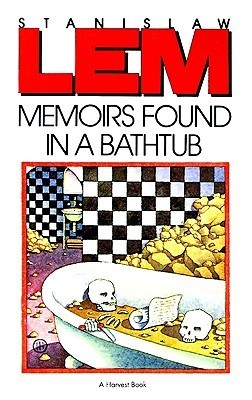
The year is 3149, and a vast paper destroying blight-papyralysis-has obliterated much of the planet’s written history. However, these rare memoirs, preserved for centuries in a volcanic rock, record the strange life of a man trapped in a hermetically sealed underground community. Translated by Michael Kandel and Christine Rose.
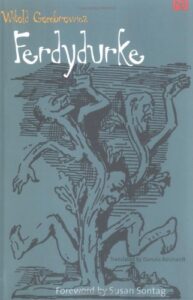
In this bitterly funny novel by the renowned Polish author Witold Gombrowicz. a writer finds himself tossed into a chaotic world of schoolboys by a diabolical professor who wishes to reduce him to childishness. Originally published in Poland in 1937. Ferdydurke became an instant literary sensation and catapulted the young author to fame. Deemed scandalous and subversive by Nazis. Stalinists. and the Polish Communist regime in turn. the novel (as well as all of Gombrowicz's other works) was officially banned in Poland for decades. It has nonetheless remained one of the most influential works of twentieth-century European literature.
Ferdydurke is translated here directly from the Polish for the first time. Danuta Borchardt deftly captures Gombrowicz's playful and idiosyncratic style. and she allows English speakers to experience fully the masterpiece of a writer whom Milan Kundera describes as "one of the great novelists of our century."
Witold Gombrowicz (1904-1969) wrote three other novels. Trans-Atlantyk. Pornografia. and Cosmos. which together with his plays and his three-volume Diary have been translated into more than thirty languages.
W absurdalnym, sztucznie wykreowanym świecie Argolandu, nic nie jest tym, czym się na pierwszy rzut oka wydaje. Drobny kombinator dzięki sprytowi i inteligencji odkrywa prawdę o pozornie idealnym porządku społeczno-ekonomicznym.
Sztandarowa powieść Janusza A. Zajdla, twórcy nurtu fantastyki socjologicznej w Polsce. Główny bohater, Adi Cherryson, alias Sneer, wzorowany jest na postaci kolegi po piórze, Adamie Wiśniewskim-Snergu. Stanisław Lem uznał Limes inferior za najoryginalniejszą polską powieść SF, jaką czytał.
Twenty-five hundred scientists have been herded into an isolated site in the Nevada desert. A neutrino message of extraterrestrial origin has been received and the scientists, under the surveillance of the Pentagon, labor on His Master's Voice, the secret program set up to decipher the transmission. Among them is Peter Hogarth, an eminent mathematician. When the project reaches a stalemate, Hogarth pursues clandestine research into the classified TX Effect--another secret breakthrough. But when he discovers, to his horror, that the TX Effect could lead to the construction of a fission bomb, Hogarth decides such knowledge must not be allowed to fall into the hands of the military.
The Futurological Congress is the fourth satirical science fiction novel in the Memoirs of Ijon Tichy series from Kafka Prize–winning author Stanislaw Lem.
“Nobody can really know the future. But few could imagine it better than Lem.”— Paris Review
Bringing his twin gifts of scientific speculation and scathing satire to bear on that hapless planet, Earth, Lem sends his unlucky cosmonaut, Ijon Tichy, to the Eighth Futurological Congress. Caught up in local revolution, Tichy is shot and so critically wounded that he is flashfrozen to await a future cure—a future whose strangeness exceeds anything the congress conjectured.
Translated by Michael Kandel.
“A vision of Earth’s future where the authorities dose the population with ‘psychemicals’ to make life in a desperately over-populated world worth living.”— Boston Globe
SETI - Search for Extraterrestrial Intelligence, diese Fahndung nach der Nadel im Heuhaufen, hat diesmal Erfolg: ein Planet im Sternbild Harpyie, die Quinta im dortigen Zetasystem, sendet Signale, und nach jahrhundertelanger Vorbereitung startet die irdische "Hermes" mit einer auserwählten Crew von Spezialisten, unter ihnen der zweite Pilot Marek Tempe, der später die Landung und den ersten Erkundungsgang vornehmen wird. Die Verwirklichung des Projekts bildet den Inhalt dieses Romans.
Als ein Gegenstück zu seinem Jugendroman "Gast im Weltraum", den er in den Jahren 1954/1955 schrieb und der erstmals 1956 bei Volk und Welt in Deutsch erschien (https://www.goodreads.com/book/show/5...), möchte Stanisław Lem seinen neuesten Roman betrachtet wissen, den er im Februar 1985 abschloss.
Keine Negierung von "Gast im Weltraum" soll "Das Fiasko" sein, sondern eher eine Revision eigener, allzu naiver fortschrittsfreudiger Illusionen, die den jungen Lem einst beflügelten und denen er nun den komplizierten, naturwissenschaftlichen, technischen und moralischen Zwängen unterliegenden Prozeß gegenüberstellt, den die Menschen bei ihrem Drang auf der Suche nach außerirdischen Zivilisationen durchlaufen.
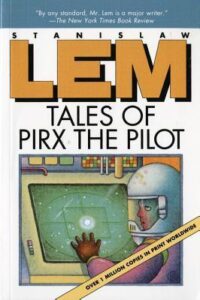
In Pilot Pirx, Lem has created an irresistibly likable character: an astronaut who gives the impression of still navigating by the seat of his pants-a bumbler but an inspired one. By investing Pirx with a range of human foibles, Lem offers a wonderful vision of the audacity, childlike curiosity, and intuition that can give humans the courage to confront outer space. Translated by Louis Iribarne.
Siamo nel lembo più estremo dell’universo esplorato dal genere umano. Un astronauta, dalla Terra, approda nella stazione spaziale che gira intorno al pianeta Solaris. Qui trova un’atmosfera di mistero e sospetto: nessuno lo accoglie, i pochi ospiti della astronave sembrano angosciati e sopraffatti, c’è un morto recente a cui si allude con circospezione ma senza sorpresa, gli oggetti subiscono strane deformazioni, si avvertono presenze. Solaris è noto agli umani come il grande pianeta «vivente». Appare in forma di vasto oceano e avrebbe dovuto conflagrare se la sua orbita avesse seguito le leggi della fisica. Ma è come dotato di capacità cosciente di reazione e questa capacità sembra legata alle apparizioni di fantasmi, proiezioni viventi di incubi, sogni e fantasie. L’astronauta è costretto a interrogarsi, mentre lo contagia la stessa angoscia che domina in tutto l’ambiente. Sul mistero della morte del compagno, innanzitutto. Ma questo lo spinge verso maggiori enigmi da svelare: se Solaris ha una propria vita, e che tipo alternativo di forma di vita; se le «apparizioni» hanno una qualche spiegazione accessibile; se tutta questa attività ha un fine, in qualche modo legato ai destini esistenziali degli umani. Se non è tutto addirittura un immane messaggio. Un’avventura avvincente e carica di attesa e mistero. Ma si potrebbe dire anche un’avventura epistemologica, nel senso che presenta alla lente della riflessione un numero enorme di quesiti che abitano i rami della filosofia. Fra essi, il più suggestivo sembra essere il tema dell’Identità, del Soggetto, dell’Io. Non esiste l’Io unico e identico a se stesso. Ognuno è un arcipelago di Io, e ciascuna delle isole di questo arcipelago si muove nei confronti dell’Io che le contiene, come un universo parallelo. Del resto, la mente, i suoi confini, le sue possibilità, i suoi legami con la potente macchina che la sorregge, il cervello, sono i temi attorno ai quali hanno sempre ruotato le storie di fantascienza di questo scrittore di Leopoli, cresciuto a Cracovia, esperto cibernetico, che è annoverato tra gli influenti capostipiti della moderna fiction di realtà virtuali.
Welcome Back!
Track your reading progress and sync your library.