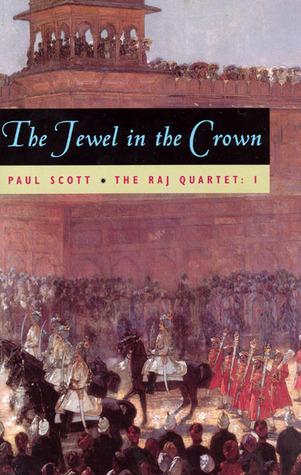
No set of novels so richly recreates the last days of India under British rule–“two nations locked in an imperial embrace”–as Paul Scott’s historical tour de force, “The Raj Quartet.” The Jewel in the Crown opens in 1942 as the British fear both Japanese invasion and Indian demands for independence.
Giants in the Earth (Norwegian: Verdens Grøde) is a novel by Norwegian-American author Ole Edvart Rølvaag. First published in Norway as two books in 1924 and 1925, the author collaborated with Minnesotan Lincoln Colcord on the English translation.
The novel follows a Norwegian family's struggles as they try to make a new life as pioneers in the Dakota territory. Rølvaag is interested in psychology and the human cost of empire building, at a time when other writers focused on the glamor and romance of the West. The book reflects his personal experiences as a settler as well as the immigrant homesteader experience of his wife’s family. Both the grim realities of pioneering and the gloomy fatalism of the Norse mind are captured in depictions of snow storms, locusts, poverty, hunger, loneliness, homesickness, the difficulty of fitting into a new culture, and the estrangement of immigrant children who grow up in a new land. It is a novel at once palpably European and distinctly American.
Giants in the Earth was turned into an opera by Douglas Moore and Arnold Sundgaard; it won the Pulitzer Prize for Music in 1951.
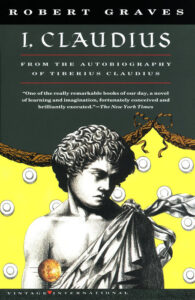
A modern classic of historical fiction written in the form of Claudius's autobiography.
Tiberius Claudius Drusus Nero Germanicus lived from 10 B.C. to 54 A.D. Despised as a weakling and dismissed as an idiot because of his physical infirmities, Claudius survived the intrigues and poisonings that marked the reigns of Augustus, Tiberius, and the mad Caligula to become emperor of Rome in 41 A.D. The first part of Robert Graves’s two-part account of the life of Tiberius Claudius, I, Claudius stands as a landmark historical novel of the 20th century from one of its great writers.
The newest edition is here. Another alternate cover can be found here.
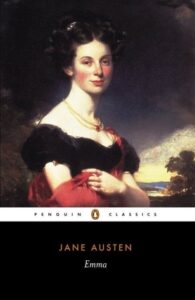
Emma Woodhouse is one of Austen's most captivating and vivid characters. Beautiful, spoilt, vain and irrepressibly witty, Emma organizes the lives of the inhabitants of her sleepy little village and plays matchmaker with devastating effect.
'The more I know of the world, the more am I convinced that I shall never see a man whom I can really love. I require so much!'
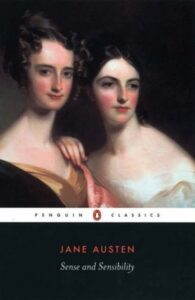
Marianne Dashwood wears her heart on her sleeve, and when she falls in love with the dashing but unsuitable John Willoughby she ignores her sister Elinor's warning that her impulsive behaviour leaves her open to gossip and innuendo. Meanwhile Elinor, always sensitive to social convention, is struggling to conceal her own romantic disappointment, even from those closest to her. Through their parallel experience of love—and its threatened loss—the sisters learn that sense must mix with sensibility if they are to find personal happiness in a society where status and money govern the rules of love.
This edition includes explanatory notes, textual variants between the first and second editions, and Tony Tanner's introduction to the original Penguin Classic edition.
A poignant coming-of-age novel set in a Welsh mining town, Richard Llewellyn's How Green Was My Valley is a paean to a more innocent age.
Growing up in a mining community in rural South Wales, Huw Morgan is taught many harsh lessons - at the kitchen table, at Chapel and around the pit-head. Looking back on the hardships of his early life, where difficult days are faced with courage but the valleys swell with the sound of Welsh voices, it becomes clear that there is nowhere so green as the landscape of his own memory.
An immediate bestseller on publication in 1939, How Green Was My Valley quickly became one of the best-loved novels of the twentieth century. Poetic and nostalgic, it is an elegy to a lost world.
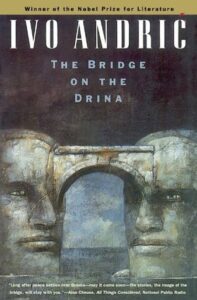
A vivid depiction of the suffering history has imposed upon the people of Bosnia from the late sixteenth century to the beginning of World War I, The Bridge on the Drina earned Ivo Andric the Nobel Prize for Literature in 1961.
A great stone bridge built three centuries ago in the heart of the Balkans by a Grand Vezir of the Ottoman Empire dominates the setting of Andric's stunning novel. Spanning generations, nationalities, and creeds, the bridge stands witness to the countless lives played out upon it: Radisav, the workman, who tries to hinder its construction and is impaled on its highest point; to the lovely Fata, who throws herself from its parapet to escape a loveless marriage; to Milan, the gambler, who risks everything in one last game on the bridge with the devil his opponent; to Fedun, the young soldier, who pays for a moment of spring forgetfulness with his life. War finally destroys the span, and with it the last descendant of that family to which the Grand Vezir confided the care of his pious bequest - the bridge.
John Galsworthy, a Nobel Prize-winning author, chronicles the ebbing social power of the commercial upper-middle-class Forsyte family through three generations, beginning in Victorian London during the 1880s and ending in the early 1920s.
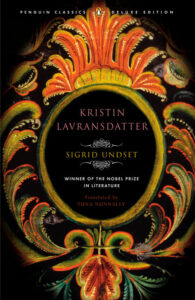
In her great historical epic Kristin Lavransdatter, set in fourteenth-century Norway, Nobel laureate Sigrid Undset tells the life story of one passionate and headstrong woman. Painting a richly detailed backdrop, Undset immerses readers in the day-to-day life, social conventions, and political and religious undercurrents of the period. Now in one volume, Tiina Nunnally's award-winning definitive translation brings this remarkable work to life with clarity and lyrical beauty.
As a young girl, Kristin is deeply devoted to her father, a kind and courageous man. But when as a student in a convent school she meets the charming and impetuous Erlend Nikulaussøn, she defies her parents in pursuit of her own desires. Her saga continues through her marriage to Erlend, their tumultuous life together raising seven sons as Erlend seeks to strengthen his political influence, and finally their estrangement as the world around them tumbles into uncertainty.
With its captivating heroine and emotional potency, Kristin Lavransdatter is the masterwork of Norway's most beloved author, one of the twentieth century's most prodigious and engaged literary minds and, in Nunnally's exquisite translation, a story that continues to enthrall.
Welcome Back!
Track your reading progress and sync your library.