
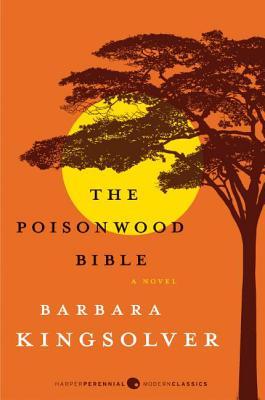
The Poisonwood Bible is a story told by the wife and four daughters of Nathan Price, a fierce, evangelical Baptist who takes his family and mission to the Belgian Congo in 1959. They carry with them everything they believe they will need from home, but soon find that all of it — from garden seeds to Scripture — is calamitously transformed on African soil. What follows is a suspenseful epic of one family’s tragic undoing and remarkable reconstruction over the course of three decades in postcolonial Africa.
“A superb mirror of a place, a time, and a group of people who capture our immediate interest and hold it tightly.” — The Philadelphia Inquirer
Young Reuven Malter is unsure of himself and his place in life. An unconventional scholar, he struggles for recognition from his teachers. With his old friend Danny Saunders—who himself had abandoned the legacy as the chosen heir to his father's rabbinical dynasty for the uncertain life of a healer — Reuven battles to save a sensitive boy imprisoned by his genius and rage. Painfully, triumphantly, Reuven's understanding of himself, though the boy change, as he starts to approach the peace he has long sought…
A novel of breathtaking sweep and emotional power that traces three hundred years in Ghana and along the way also becomes a truly great American novel. Extraordinary for its exquisite language, its implacable sorrow, its soaring beauty, and for its monumental portrait of the forces that shape families and nations, Homegoing heralds the arrival of a major new voice in contemporary fiction.
Two half-sisters, Effia and Esi, are born into different villages in eighteenth-century Ghana. Effia is married off to an Englishman and lives in comfort in the palatial rooms of Cape Coast Castle. Unbeknownst to Effia, her sister, Esi, is imprisoned beneath her in the castle's dungeons, sold with thousands of others into the Gold Coast's booming slave trade, and shipped off to America, where her children and grandchildren will be raised in slavery. One thread of Homegoing follows Effia's descendants through centuries of warfare in Ghana, as the Fante and Asante nations wrestle with the slave trade and British colonization. The other thread follows Esi and her children into America. From the plantations of the South to the Civil War and the Great Migration, from the coal mines of Pratt City, Alabama, to the jazz clubs and dope houses of twentieth-century Harlem, right up through the present day, Homegoing makes history visceral, and captures, with singular and stunning immediacy, how the memory of captivity came to be inscribed in the soul of a nation.
Generation after generation, Yaa Gyasi's magisterial first novel sets the fate of the individual against the obliterating movements of time, delivering unforgettable characters whose lives were shaped by historical forces beyond their control. Homegoing is a tremendous reading experience, not to be missed, by an astonishingly gifted young writer.
A masterly, haunting new novel from a writer heralded by The Washington Post Book World as “the 21st-century daughter of Chinua Achebe,” Half of a Yellow Sun re-creates a seminal moment in modern African history: Biafra’s impassioned struggle to establish an independent republic in Nigeria in the 1960s, and the chilling violence that followed.
With astonishing empathy and the effortless grace of a natural storyteller, Chimamanda Ngozi Adichie weaves together the lives of three characters swept up in the turbulence of the decade. Thirteen-year-old Ugwu is employed as a houseboy for a university professor full of revolutionary zeal. Olanna is the professor’s beautiful mistress, who has abandoned her life of privilege in Lagos for a dusty university town and the charisma of her new lover. And Richard is a shy young Englishman in thrall to Olanna’s twin sister, an enigmatic figure who refuses to belong to anyone. As Nigerian troops advance and the three must run for their lives, their ideals are severely tested, as are their loyalties to one another.
Epic, ambitious, and triumphantly realized, Half of a Yellow Sun is a remarkable novel about moral responsibility, about the end of colonialism, about ethnic allegiances, about class and race—and the ways in which love can complicate them all. Adichie brilliantly evokes the promise and the devastating disappointments that marked this time and place, bringing us one of the most powerful, dramatic, and intensely emotional pictures of modern Africa that we have ever had.
Cry, the Beloved Country, the most famous and important novel in South Africa’s history, was an immediate worldwide bestseller in 1948. Alan Paton’s impassioned novel about a black man’s country under white man’s law is a work of searing beauty.
Cry, the beloved country, for the unborn child that is the inheritor of our fear. Let him not love the earth too deeply. Let him not laugh too gladly when the water runs through his fingers, nor stand too silent when the setting sun makes red the veld with fire. Let him not be too moved when the birds of his land are singing, nor give too much of his heart to a mountain or valley. For fear will rob him of all if he gives too much.
The eminent literary critic Lewis Gannett wrote, “We have had many novels from statesmen and reformers, almost all bad; many novels from poets, almost all thin. In Alan Paton’s Cry, the Beloved Country the statesman, the poet and the novelist meet in a unique harmony.”
Cry, the Beloved Country is the deeply moving story of the Zulu pastor Stephen Kumalo and his son, Absalom, set against the background of a land and a people riven by racial injustice. Remarkable for its lyricism, unforgettable for character and incident, Cry, the Beloved Country is a classic work of love and hope, courage and endurance, born of the dignity of man.
Librarian's note: See alternate cover edition of ISBN 0571225381 here.
In the summer of 1956, Stevens, a long-serving butler at Darlington Hall, decides to take a motoring trip through the West Country. The six-day excursion becomes a journey into the past of Stevens and England, a past that takes in fascism, two world wars, and an unrealised love between the butler and his housekeeper.
Logan Gonzago Mountstuart, writer, was born in 1906, and died of a heart attack on October 5, 1991, aged 85. William Boyd's novel Any Human Heart is his disjointed autobiography, a massive tome chronicling "my personal rollercoaster"--or rather, "not so much a rollercoaster", but a yo-yo, "a jerking spinning toy in the hands of a maladroit child." From his early childhood in Montevideo, son of an English corned beef executive and his Uraguayan secretary, through his years at a Norfolk public school and Oxford, Mountstuart traces his haphazard development as a writer. Early and easy success is succeeded by a long half-century of mediocrity, disappointments and setbacks, both personal and professional, leading him to multiple failed marriages, internment, alcoholism, and abject poverty.
Mountstuart's sorry tale is also the story of a British way of life in inexorable decline, as his journey takes in the Bloomsbury set, the General Strike, the Spanish Civil War, 1930s Americans in Paris, wartime espionage, New York avant garde art, even the Baader-Meinhof gang--all with a stellar supporting cast. The most sustained and best moment comes mid-book, as Mountstuart gets caught up in one of Britain's murkier wartime secrets, in the company of the here truly despicable Duke and Duchess of Windsor. Elsewhere Boyd occasionally misplaces his tongue too obviously in his cheek--the Wall Street Crash is trailed with truly crashing inelegance--but overall Any Human Heart is a witty, inventive and ultimately moving novel. Boyd succeeds in conjuring not only a compelling 20th century but also, in the hapless Logan Mountstuart, an anti-hero who achieves something approaching passive greatness. --Alan Stewart, Amazon.co.uk
An alternative cover edition for this ISBN can be found here.
The author of award-winning Hamnet brings the world of Renaissance Italy to jewel-bright life in this unforgettable fictional portrait of the captivating young duchess Lucrezia de’ Medici as she makes her way in a troubled court.
Florence, the 1550s. Lucrezia, third daughter of the grand duke, is comfortable with her obscure place in the palazzo: free to wonder at its treasures, observe its clandestine workings, and devote herself to her own artistic pursuits. But when her older sister dies on the eve of her wedding to the ruler of Ferrara, Modena and Reggio, Lucrezia is thrust unwittingly into the limelight: the duke is quick to request her hand in marriage, and her father just as quick to accept on her behalf.
Having barely left girlhood behind, Lucrezia must now enter an unfamiliar court whose customs are opaque and where her arrival is not universally welcomed. Perhaps most mystifying of all is her new husband himself, Alfonso. Is he the playful sophisticate he appeared to be before their wedding, the aesthete happiest in the company of artists and musicians, or the ruthless politician before whom even his formidable sisters seem to tremble?
As Lucrezia sits in constricting finery for a painting intended to preserve her image for centuries to come, one thing becomes worryingly clear. In the court’s eyes, she has one duty: to provide the heir who will shore up the future of the Ferranese dynasty. Until then, for all of her rank and nobility, the new duchess’s future hangs entirely in the balance.
Full of the beauty and emotion with which she illuminated the Shakespearean canvas of Hamnet, Maggie O’Farrell turns her talents to Renaissance Italy in an extraordinary portrait of a resilient young woman’s battle for her very survival.
Gripping, tragic, and densely atmospheric—a masterpiece of suspense San Piedro Island, north of Puget Sound, is a place so isolated that no one who lives there can afford to make enemies. But in 1954 a local fisherman is found suspiciously drowned, and a Japanese American named Kabuo Miyamoto is charged with his murder. In the course of the ensuing trial, it becomes clear that what is at stake is more than a man's guilt. For on San Pedro, memories of a charmed love affair between a white boy and the Japanese girl who grew up to become Kabuo's wife; memories of land desired, paid for, and lost. Above all, San Piedro is haunted by the memory of what happened to its Japanese residents during World War II, when an entire community was sent into exile while its neighbors watched.
Welcome Back!
Track your reading progress and sync your library.